
A 4G fixed wireless phone vs landline is a choice between two ways of delivering a desk telephone service. A 4G fixed wireless phone looks and works like a landline desk phone, but it places and receives calls through a SIM card on the 4G LTE mobile network. It does not need a copper pair, a wall socket or a broadband router to make a voice call. A conventional landline telephone depends on a fixed access service — historically a copper PSTN (Public Switched Telephone Network) line, and increasingly a digital landline over fibre or broadband.
Choose a 4G fixed wireless phone when a fixed line is unavailable or slow to install, the site may move, or you need a desk phone with a backup battery. Keep a landline, or a digital landline over wired broadband, where an analogue port, a PBX, or a telecare or alarm device already depends on that line — and confirm the device will still work after any network change. For importers and telecom buyers, the decision also includes radio bands, VoLTE and certification, not only the shape of the phone.
Key takeaways
- A 4G fixed wireless phone is a desk telephone with a SIM slot. Calls travel over the mobile network, so no copper pair is required.
- A 4G fixed wireless phone vs landline comes down to access: 4G wins where coverage exists and a line cannot be installed quickly; a landline or digital landline still fits sites with fixed broadband, a PBX or line-dependent alarms.
- Copper PSTN lines are often powered from the exchange and can keep working in a local power cut. A 4G phone or a digital landline needs mains power plus a tested backup battery if voice must survive an outage.
- Specify VoLTE, the operator’s LTE bands, an external antenna for weak signal, and battery standby before you freeze an OEM SKU. A 4G data module is not automatically a voice-over-LTE phone.
- Cheng Feng Hao manufactures 4G fixed wireless phones such as the CFH8006-4G+DECT for OEM/ODM orders from 3,000 pcs. State destination networks in the first quotation.
What is a 4G fixed wireless phone?
A 4G fixed wireless phone — also called a fixed wireless phone (FWP), a SIM desk phone or a 4G landline phone — is a desktop telephone that registers on a cellular network instead of a copper loop. The user inserts a SIM, connects power and uses the handset as they would a conventional desk phone: keypad, speakerphone, caller ID and, on many models, SMS.
It is not a mobile handset, and it is not a 4G router plus a VoIP adapter, which needs a data session and more configuration. A DECT cordless phone only covers the building; it still needs a landline, a digital-landline adapter or a 4G base to reach the public network.
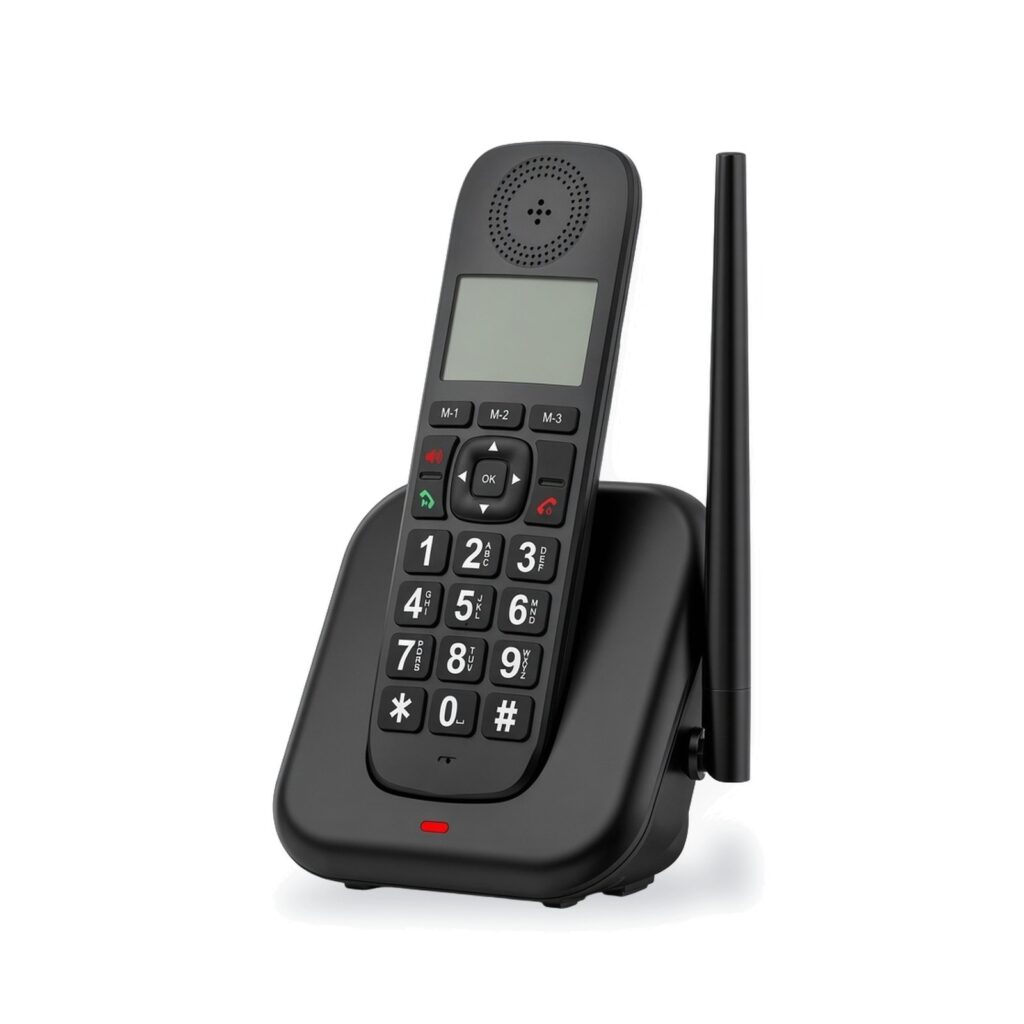
Cheng Feng Hao’s range includes the CFH8006-4G+DECT and CFH8006TAM-4GDECT, which combine 4G with VoLTE, a Wi-Fi hotspot for up to eight devices, and a DECT base (up to five handsets; 50 m indoor / 300 m outdoor as listed). The TAM version adds photo keys, SOS keys and volume boost. The SKH-1618 offers dual SIM and a hotspot for up to ten users; the SKH-1619 is the big-button variant; and the SKH-2200 adds a 2.4-inch colour screen and an external TNC antenna.
How a landline telephone still works
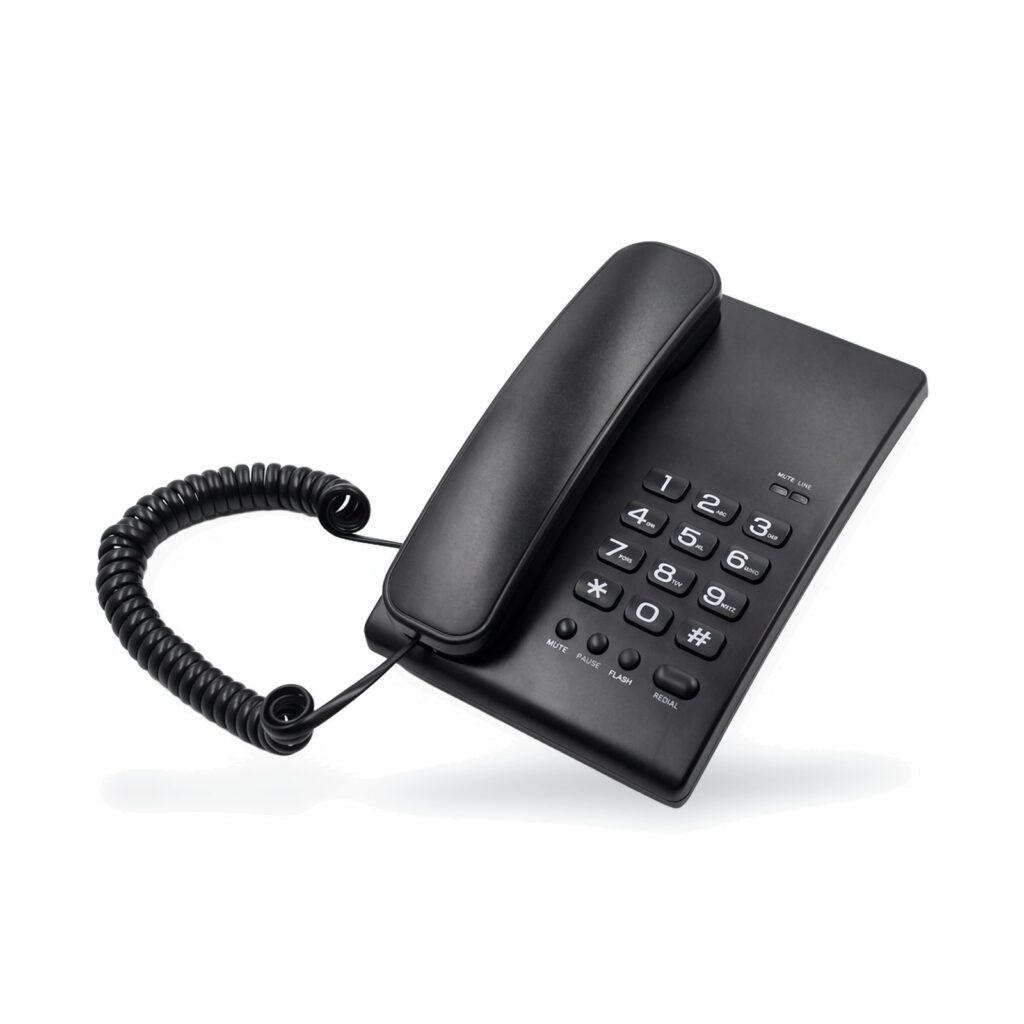
A traditional landline telephone — a corded desk phone such as the SKH-2000 — draws a dial tone from a fixed access service. For decades that service was a copper PSTN pair, with tone or pulse dialling, redial, mute, speakerphone and, where needed, flash timing for a PABX.
Copper networks are being withdrawn in many markets, on different timetables. In the United Kingdom, Ofcom explains that landlines are moving to digital technology. BT plans to retire its old Openreach landline network by 31 January 2027. Other UK networks, including Virgin Media O2 and KCOM, also plan to retire theirs, but Ofcom notes that those dates have not yet been set. A digital landline typically works over broadband: the existing handset plugs into a router or analogue adapter, and the number can be kept. A corded telephone then works only if some analogue or ATA port remains at the site.
4G fixed wireless phone vs landline: a side-by-side comparison
Coverage, power and any devices already on the line decide the result.
| Point | 4G fixed wireless phone | Copper landline | Digital landline over broadband |
|---|---|---|---|
| How the call is carried | SIM card on the 4G LTE mobile network | Copper pair to the exchange (PSTN) | Voice over fibre or cable broadband, usually through a router or adapter |
| Installation | Insert the SIM, apply power and confirm signal at the site | Needs an existing line, or a provider visit | Needs working broadband and, often, a provider adapter |
| Power during an outage | Needs mains power. A built-in battery lasts until it is exhausted (CFH8006: 1,200 mAh, 48-hour standby) | Often line-powered from the exchange, so the phone can keep ringing in a local power cut | Needs mains power at the router or adapter; without a backup battery, service falls with the electricity |
| Coverage and mobility | Depends on mobile signal and the correct LTE bands. The phone can move with a valid SIM | Tied to the copper pair and the service address | Tied to the broadband account and the service address |
| Alarms, telecare, lifts and fax | Only if the attached device and the mobile voice path have been tested together | Historically the default path; still verify any change | Must be checked before copper is removed. Some devices do not work on a digital landline |
When a 4G fixed wireless phone is the better choice
Rural homes, farms, construction offices, pop-up retail and newly occupied premises often have mobile coverage long before a copper or fibre voice service is commissioned. A 4G desk phone can be deployed once a suitable SIM and a confirmed signal are available, without trenching or a provider visit. A rental or project office can also take the phone to the next address: the service follows the SIM, not a wall socket.
Operators and distributors running PSTN-exit programmes sometimes issue a 4G voice phone where fibre has not arrived, or as a temporary path while a digital landline is arranged. That only works if voice has been tested on the target operator as VoLTE, and if emergency-call routing and any care or alarm devices have been checked at that address.
When to stay with a landline, a digital landline or a SIP phone
- Stable fibre or cable broadband is already in place and the provider offers a digital landline. Keeping the existing corded handset on an adapter is usually simpler than adding a cellular radio.
- A PBX already presents analogue extensions. A basic corded telephone with the correct flash timing remains the straightforward instrument. If the office is moving off analogue ports, look at SIP / IP desk phones rather than a 4G unit at every desk.
- Alarms, lift phones, fax machines or telecare pendants share the line. Ofcom’s UK guidance is clear: tell the provider and the device supplier before a landline is changed to digital, because some devices will not work on the new path. The same caution applies to 4G voice.
- Mobile coverage at the exact location is weak or unstable, including at busy hours. An external antenna, as on the SKH-2200, can recover a marginal site, but it cannot fix a deep coverage hole.
- The requirement is multi-line office telephony with hunt groups, recording or a receptionist console. That is a PBX or cloud-voice problem, not a single-SIM desk-phone problem.
What importers must specify: VoLTE, bands, battery and antenna
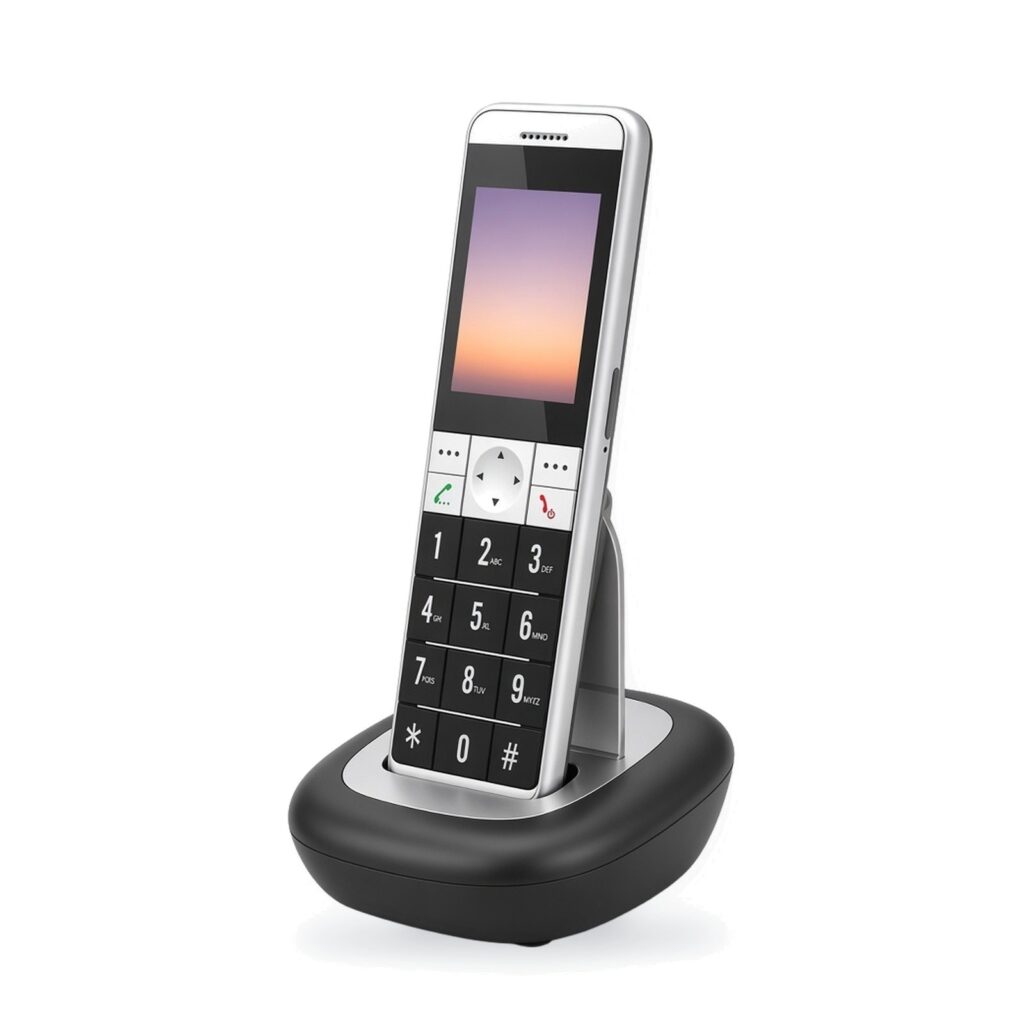
VoLTE is not optional in a 3G-retirement market. Voice over LTE carries the call on the 4G network. A device that is “4G” for data but not for voice will fall back to 3G or 2G — and will not call if those networks have closed. Require VoLTE on the named operator, not merely an LTE data module. In Cheng Feng Hao’s catalogue, VoLTE is listed on the CFH8006-4G+DECT and the CFH8006TAM-4GDECT. For any other model, confirm the voice path and a destination-network test before a volume order.
LTE bands must match the operator, not a generic “4G” label. The SKH-1618, SKH-1619 and SKH-2023 listings describe 4G TDD LTE plus 3G WCDMA at 2100 MHz and 2G GSM at 850/900/1800 MHz; the SKH-2200 lists 4G LTE FDD/TDD. Ask the factory to map your operators’ exact bands and treat a mismatch as a different SKU.
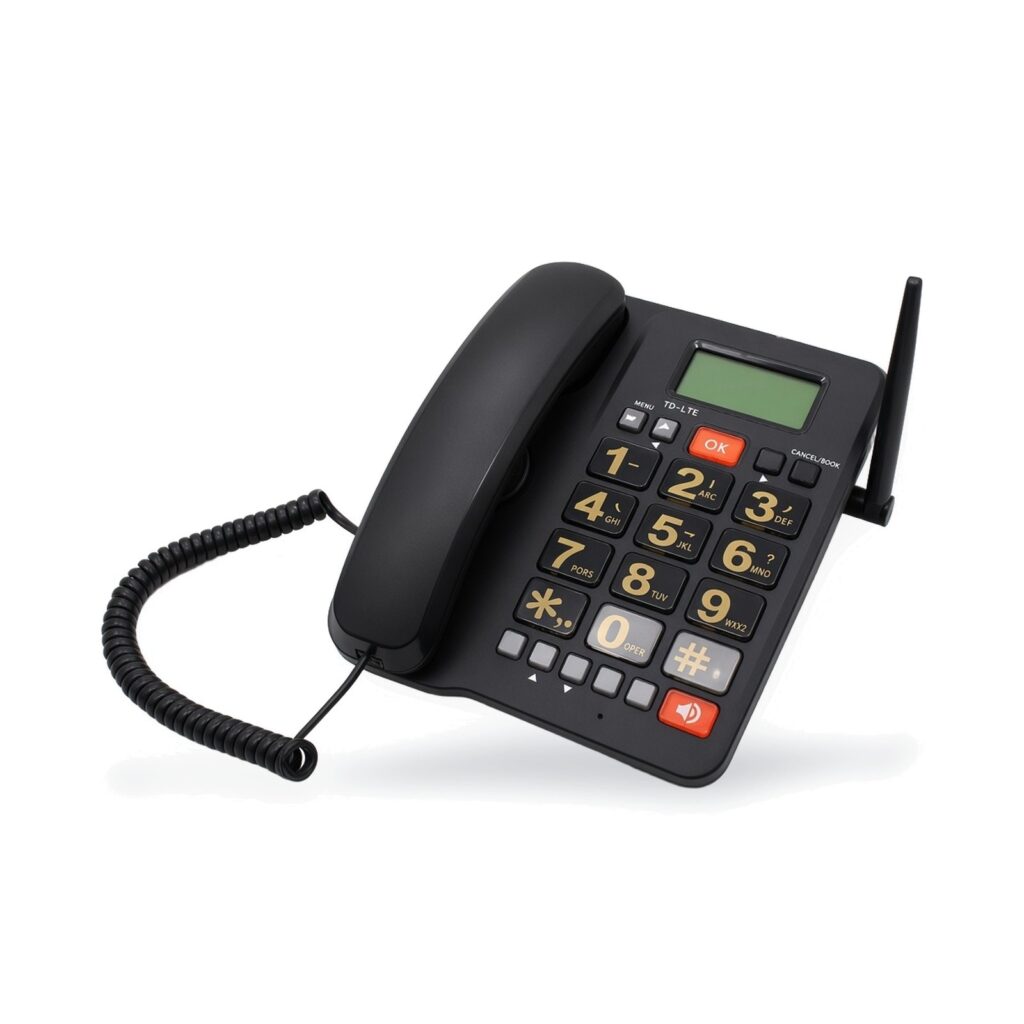
Specify battery backup and the antenna. A 4G fixed wireless phone is not powered by the exchange. If voice must continue in a power cut, require a built-in battery and publish the real standby figure. The CFH8006 models list a 1,200 mAh lithium battery and 48-hour standby; do not invent a talk time that is not on the shipped specification. For weak or metal-roofed sites, specify an external antenna (the SKH-2200 uses a TNC connector). Dual SIM, big buttons, SOS keys and the DECT frequency plan (see EU DECT vs DECT 6.0) also change the SKU.
A short OEM checklist for a 4G fixed wireless phone order
Put the following in the first request for quotation, so the factory quotes the radio and certificate pack you will actually need. For the wider process, see our OEM vs ODM telephone manufacturing guide.
- Destination countries and operators, including LTE bands and whether VoLTE is required because 3G or 2G voice is closing.
- Voice path and approval — VoLTE on the named operator, any approved-device list, and a sample test at a real site, including a busy-hour call.
- Power-cut requirement and antenna — whether a backup battery is mandatory, the standby figure to be published, and whether an external TNC (or similar) connector is supplied in the box.
- Form factor — desk phone or DECT multi-handset; single or dual SIM; hotspot; big buttons, photo keys or SOS; display language.
- Certification, branding and packing — CE, FCC, RoHS or other marks for the destination, with reports that match the exact SKU (see our telephone certification guide). ISO 9001:2015, ISO 14001:2015, BSCI and ETL are published on the Certificates page. Logo, colours, carton marks and manual language are standard OEM options. The published MOQ is 3,000 pcs per model.
Cheng Feng Hao Electronics, founded in 2003, manufactures OEM and ODM telephones at its Longgang, Shenzhen factory (established 2010): more than 250 employees, including 10 product engineers, a 30,000 m² site and US$10 million in annual output, under the CFH brand. Enquiries to sales1@skhelc.com during office hours (Monday to Saturday, 09:00–18:00 China time, GMT+8) are answered within 24 hours.
Frequently asked questions
What is a 4G fixed wireless phone?
It is a desk telephone that uses a SIM card and the 4G LTE mobile network instead of a copper telephone line. You install it wherever there is suitable coverage, without a landline wall socket. It is also called a fixed wireless phone, a SIM desk phone or a 4G landline phone.
Is a 4G fixed wireless phone better than a landline?
It depends on the site. A 4G fixed wireless phone is usually better where no fixed line exists, installation must be fast, or the phone may move. A landline or a digital landline over fibre is often better where stable broadband is already in place, a PBX is in use, or an alarm or telecare device depends on that line.
Does a 4G fixed wireless phone work during a power cut?
Only if it has a charged backup battery, and only until that battery is exhausted. Unlike many copper PSTN phones, it is not powered by the telephone exchange. The CFH8006-4G+DECT and CFH8006TAM-4GDECT list a 1,200 mAh battery and 48-hour standby. Digital landlines over fibre also need a backup if they must work in an outage.
Does a 4G fixed wireless phone need Wi-Fi or broadband?
No. Voice calls use the mobile network, not the building’s Wi-Fi or fibre. Some models can also create a Wi-Fi hotspot (up to eight devices on the CFH8006 series, and up to ten on the SKH-1618, SKH-1619 and SKH-2023), but the hotspot is an extra, not a requirement for calling.
Why does VoLTE matter on a 4G fixed wireless phone?
VoLTE carries the voice call on the 4G network. A phone that is 4G for data only may fall back to 3G or 2G to call. If those networks have been retired, the phone will not place calls. Require VoLTE — and a test on the destination operator — especially in markets that have closed 3G.
What should importers specify when ordering OEM 4G fixed wireless phones?
Name the destination countries and operators, the LTE bands, VoLTE and any operator approval, battery backup, antenna type, form factor (desk, big-button or DECT), display language and the certification marks required. Cheng Feng Hao’s published MOQ is 3,000 pcs per model, with custom logo, colours, packaging and language available.
Request a 4G fixed wireless phone quotation
If you are comparing a 4G fixed wireless phone vs landline for a destination market, send the countries, operators, LTE bands and estimated quantity to sales1@skhelc.com or use the contact form. We will confirm which CFH platform fits the network and reply within 24 hours during office hours.