
An OEM telephone manufacturer builds phones to your brand and your agreed specification; an ODM manufacturer also contributes the design. For importers, distributors and hotel or office buyers sourcing from China, the distinction matters because it changes who owns the tooling, how fast a first order can ship, and how much customisation you should expect for the money. This guide explains the difference, the usual manufacturing steps, and the questions that keep a custom-phone project on track.
Key takeaways
- OEM is your brand on an agreed design. ODM is the factory’s (or a joint) design, then your brand. Most telephone programmes use a mix of the two.
- A clean project follows a fixed sequence: brief, quotation, sample, tooling if needed, certifications, mass production, inspection, packing and shipment.
- Lock the destination markets and product certifications before you approve mass production. A sample that looks right can still be illegal to import.
- Put logo, colour, packaging, display language, accessories and labelling in the sample sign-off, not in a later email.
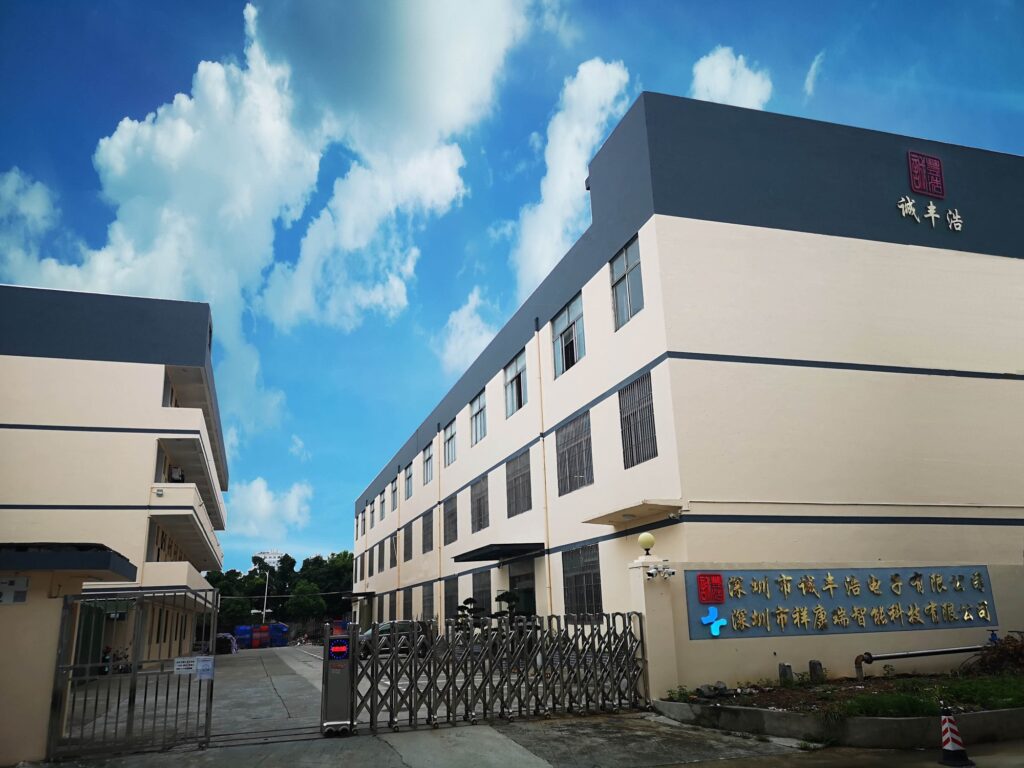
- Cheng Feng Hao (CFH brand) is a Shenzhen factory founded in 2003, with its production site established in 2010, 250+ employees and a 30,000 m² area. Published MOQ is 3,000 pieces per model (500 pieces for the TC-001 and TC-002 tablet phones).
OEM vs ODM: what buyers actually get
The two abbreviations are used loosely in trade, so define them in the purchase contract, not only in marketing copy.
| OEM (original equipment manufacturer) | ODM (original design manufacturer) | |
|---|---|---|
| Who designs the product | You provide a complete specification, or you adopt a factory platform with tightly specified changes | The factory (or a joint team) designs the product around your requirements |
| Typical starting point | An existing, already-tooled model | A new housing, a new feature set, or a major change to an existing platform |
| Tooling | Often little or none if you stay on a current housing | New plastic tools, and sometimes new PCB or keypad tooling, if the look or layout changes |
| Time to first mass order | Usually shorter, because the platform already exists | Longer: design, tooling and safety or radio tests sit on the critical path |
| Brand and packaging | Your logo, colour, box and manuals, as agreed | The same, plus more freedom on the industrial design |
| Best when | You need a reliable, certifiable telephone under your brand at a predictable MOQ | You need a distinctive product or a feature the current catalogue does not offer |
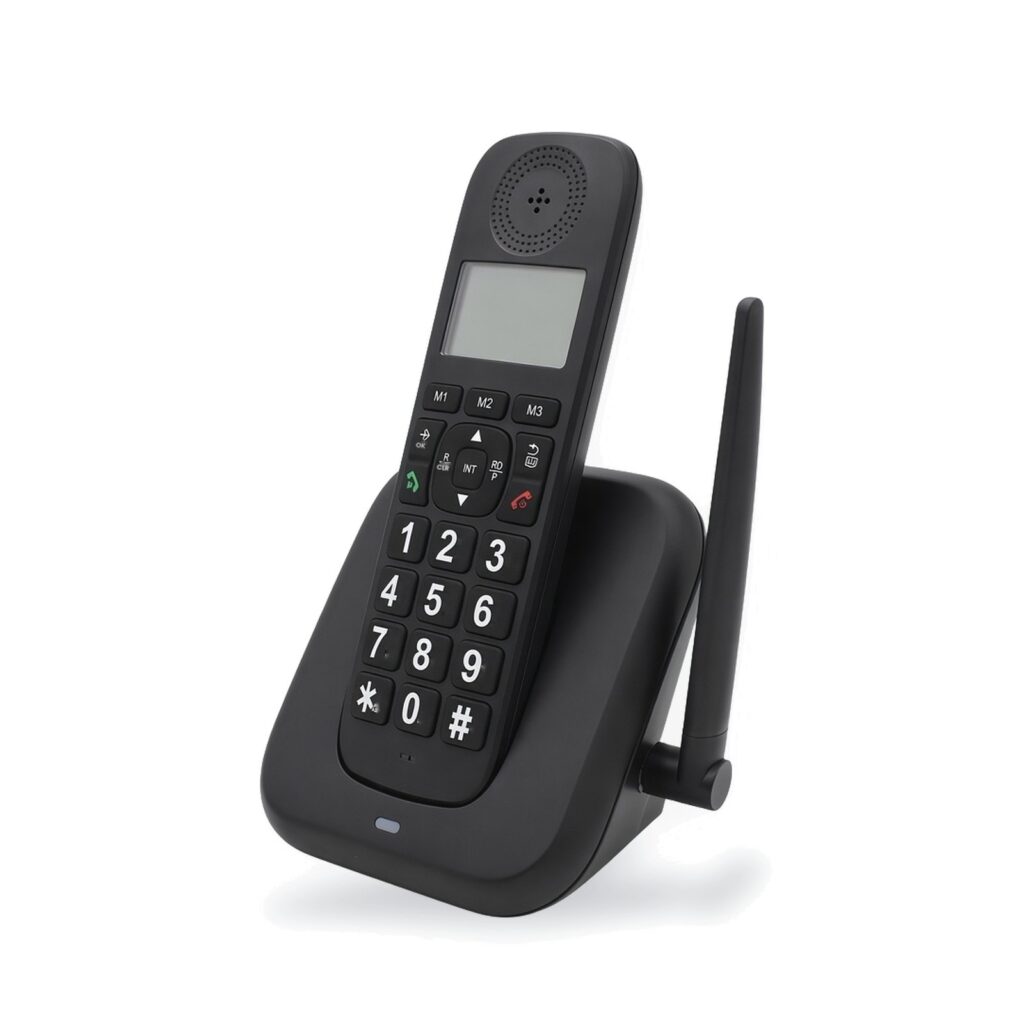
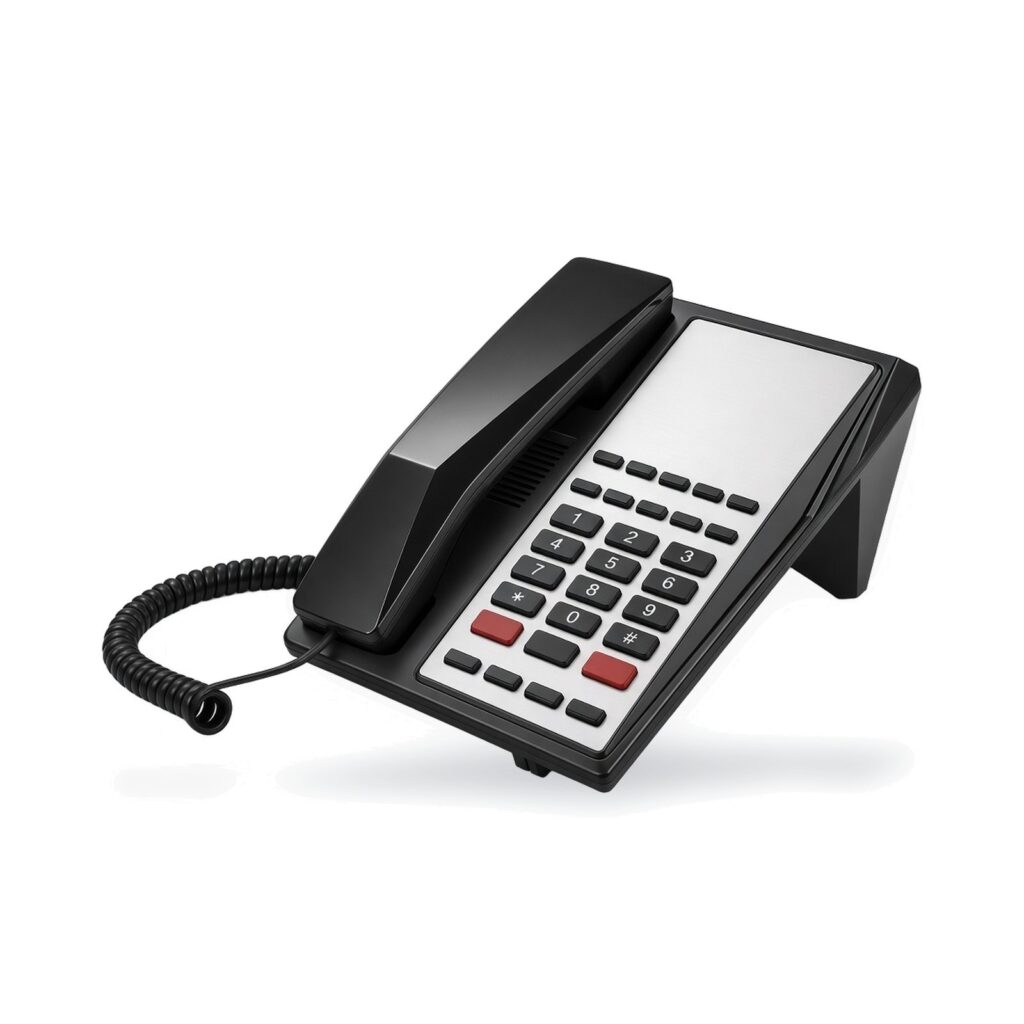
In practice, many orders are OEM on an ODM platform: you start from a factory model such as a caller ID phone, a hotel telephone or a DECT cordless phone, then apply your logo, colours, packaging and display language. That is still a serious custom programme. It is simply faster and less capital-intensive than a clean-sheet design. Cheng Feng Hao lists every current model as available for OEM and ODM, with in-house R&D for new designs to a customer’s specification. More company background is on the About Us page.
The usual telephone manufacturing process
Factories differ in how they name the gates, but a professional telephone project almost always passes through the same stages. If a supplier cannot explain this sequence in writing, treat that as a risk.
1. Brief and quotation
Send a one-page brief: product type, target countries, estimated first-order and annual quantities, must-have features, colours, logo and packaging language, and the certificates your retailers or customs broker will ask for. A usable quote should come back with a unit price basis (EXW, FOB or as requested), a statement of what is included (accessories, printing, carton marks, certificates), the MOQ, and a provisional schedule. Cheng Feng Hao publishes an MOQ of 3,000 pieces per model, with 500 pieces for the TC-001 and TC-002 Android tablet phones, and states that enquiries are answered within 24 hours during office hours (Monday to Saturday, 09:00-18:00, China time, UTC+8).
2. Specification and artwork lock
Turn the quote into a controlled specification: face layout, silkscreen or IML logo, keypad printing, LCD language pack, default flash time, caller-ID type, gift-box and master-carton artwork, and the rating-label content (model, brand, input, certification marks). This document is what samples and production will be checked against. Changes after sample approval should be written, dated and priced.
3. Engineering sample
You should receive working samples that match the agreed hardware and, as far as possible, the production firmware. Check fit and finish, keypad feel, handset and speaker volume, hook switch, incoming ringing, PABX flash behaviour, and caller ID on a line that uses the signalling of your market (see the caller ID phone buying guide). For cordless or cellular models, also check registration, range in a real building, and charger behaviour. Keep a signed sample in your office; that physical piece is the reference if a production lot diverges.
4. Tooling, if the design is new
A new housing or a changed keypad usually means plastic injection tools, and sometimes new metal or silicone parts. Agree in writing who pays for the tools, who owns them, where they are stored, and what happens if you later move the programme. Tooling sits on the critical path together with certification, so do not treat it as a paperwork afterthought. If you stay on an existing Cheng Feng Hao housing, you may avoid new tools entirely — that is one reason buyers start from a catalogue model.
5. Certification and labelling
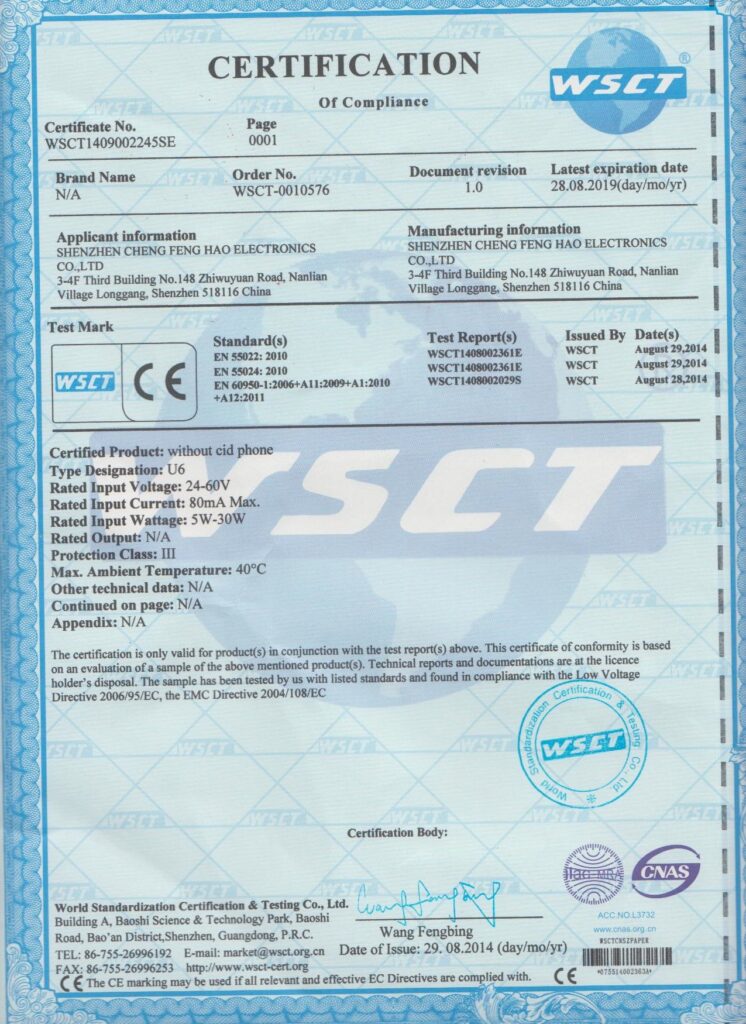
A telephone that will be imported into the EU, the UK, the US or other regulated markets needs the correct product approvals, not only a factory ISO certificate. ISO 9001:2015 and ISO 14001:2015 describe how the factory manages quality and environmental processes; they are not a substitute for CE marking, an FCC grant, an ETL listing or a RoHS declaration. Build the test samples and the nameplate into the plan. Details are in our telephone certifications article. Cheng Feng Hao holds ISO 9001:2015, ISO 14001:2015, BSCI and ETL, and arranges CE, FCC, RoHS and other market tests on request for the destination you name. Copies of factory certificates are published on the Certificates page.
6. Mass production and quality control
A factory of this type typically runs incoming inspection on critical parts, in-process checks on SMT and assembly, and a final functional test on finished phones (tone or pulse dialling, ringing, hook, polarity, caller ID where fitted, and radio tests on wireless models). Agree the acceptable quality limit (AQL) and whether you or a third party will do a pre-shipment inspection. For a first order, an inspection is cheap insurance. Do not invent a defect-rate promise in the contract unless the factory has actually offered one in writing.
7. Packing, documents and shipment
Confirm accessory lists (handset cord, line cord, base, power adapter if needed, quick-start guide), carton quantities, barcode standards and shipping marks. Commercial documents should match the labelled model name and the certificates. If a radio model has an FCC ID or a CE type reference, that string must appear where the rule requires it. The factory’s annual output is published as US$10 million; lead time still depends on the model, quantity, printing, tooling and the certification queue, so ask for a dated schedule with the order confirmation rather than assuming a standard number of days.
What you can customise — and what you should not improvise
On an existing CFH platform, the usual OEM set is logo, colours, packaging and display language. Feature changes (a different flash-time default, a hidden programming code, a unique face layout, an extra guest-service key) are possible on many models but should be quoted as engineering work, not assumed to be free. Radio frequency, safety construction and EMC-critical layout should not be tweaked in the field to save a few cents; those changes can void a certificate.
If you need a product that is not in the current telephone catalogue — for example a distinctive hotel face, a new big-button layout, or a cordless feature set — that is an ODM discussion. Bring sketches or a competitor sample, and be ready to fund tooling and a test plan.
How to choose a telephone factory in China
- Are they a factory or a trader? Ask for the legal name, the factory address, and whether production is on site. Cheng Feng Hao Electronics Co., Ltd (formerly Shenzhen Shenkinhao Electronics Co., Ltd) lists its factory at No. 107, Lianxin Road, Wulian Community, Longgang Street, Longgang District, Shenzhen.
- Do the management-system certificates match the legal name? Check the ISO and social-audit documents, not only a logo on a website.
- Can they show product-level test evidence for a model close to yours (CE, FCC, ETL, RoHS, as applicable)?
- Is the catalogue real? Walk through the exact model you will buy, including the features on the public product page, and compare them with the sample.
- Who answers after the shipment? Agree a contact, a spare-parts policy and how firmware or keypad errors will be handled.
An Alibaba storefront can be a useful starting point — Cheng Feng Hao’s store is skhelc.en.alibaba.com — but the contract, the specification and the inspection should still be done as they would with any other factory.
A one-page RFQ you can copy
- Company, destination countries, and Incoterm you want quoted.
- Product type and any reference model (for example CFH-8001, SKH-HT99B, SKH-181R).
- First-order quantity and, if known, a 12-month forecast.
- Must-have features, colours, logo files, packaging language and accessories.
- Required certificates and whether you need the factory to apply, or you will use your own responsible party.
- Sample quantity and the address for sample shipment.
- Any retailer, hotel-group or carrier packaging rules.
Frequently asked questions
What is the difference between an OEM and an ODM telephone manufacturer?
An OEM manufacturer builds the telephone to an agreed specification under your brand, often starting from an existing platform. An ODM manufacturer also designs the product, or co-designs it, which may involve new tooling and a longer certification path. Many programmes combine both: ODM design, OEM branding.
What is Cheng Feng Hao’s minimum order quantity?
The published MOQ is 3,000 pieces per model. The TC-001 and TC-002 Android tablet phones have a published MOQ of 500 pieces. Confirm the figure on your quotation, because special colours or new tools can change the commercial terms.
How long does a custom telephone order take?
There is no single honest number. Time depends on whether new tooling is required, how long certification takes for your market, printing, and the production queue. Ask for a dated schedule with the order confirmation, and build inspection and sea freight into your own plan.
Can I put my own logo and packaging on CFH phones?
Yes. Cheng Feng Hao offers OEM and ODM customisation of logo, colours, packaging and display language, and its R&D team develops new designs to a customer’s specification.
Where is the factory, and how do I start?
The factory, established in 2010, is in Longgang District, Shenzhen, China. Email sales1@skhelc.com or use the contact form with your model, quantity and target market.
Ready to brief a custom telephone project?
Send the target market, quantity and the model or features you need. Cheng Feng Hao is an OEM/ODM telephone manufacturer in Shenzhen (founded 2003; factory 2010). Email sales1@skhelc.com or request a quote. Browse the product catalogue if you want to start from a current platform.
Related reading: How to choose a cordless phone for business · Hotel phone buying guide · Telephone certifications for importers.