
If you need to know how to choose a cordless phone for an office, shop or small warehouse, start with the radio standard and the destination market, not the colour of the handset. For almost every new B2B order, a DECT cordless phone is the right baseline: it uses a reserved frequency band, supports multiple handsets on one base, and is widely accepted by importers. Older analog cordless sets are cheaper, but they are harder to certify consistently and are a poor fit for most professional sites.
Key takeaways
- Choose DECT for new business and residential OEM programmes unless a buyer has a documented reason to stay on an older analog band.
- Confirm the frequency plan for the destination country before you tool or certify a model. EU DECT (1880–1900 MHz) and US/Canadian DECT 6.0 (1920–1930 MHz) are not interchangeable.
- Specify coverage (how many bases or repeaters), how many handsets you need, simultaneous calls, and whether you need intercom, transfer, conference or an answering machine.
- Ask the factory for the intended CE, FCC or other market certificates at quotation stage, not after samples are approved. See our telephone certification guide.
- For sites with no fixed line, consider a 4G fixed wireless phone instead of forcing a DECT base onto a cellular plan it was not designed for.
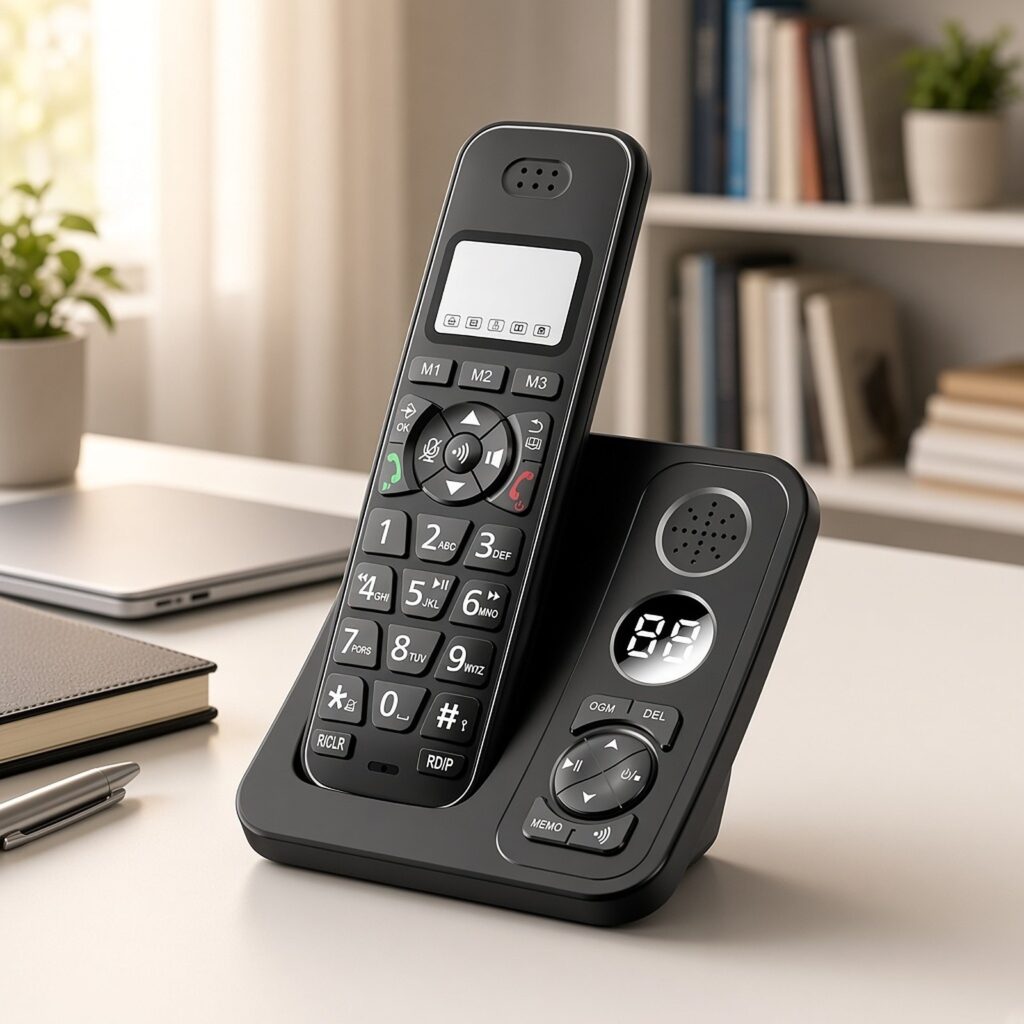
What a business cordless phone needs to do
A consumer home set can be good enough if it rings and holds a charge. A buyer purchasing hundreds or thousands of units has a longer list. Staff move between a desk, a storeroom and a counter. Several people may need to answer the same number. The phone has to survive daily charging, survive a drop from a belt clip, and still work after a year in a retail environment.
Write those needs down as a short specification before you compare catalogues. At minimum, record: the country of use, whether a PSTN (analogue) line, a PABX extension or a VoIP adapter will feed the base, the number of handsets per base, whether people must talk to each other (intercom) or transfer calls, and whether voicemail or a built-in answering machine is required. That short brief is what an OEM telephone manufacturer actually quotes against.
DECT vs analog cordless phones
DECT (Digital Enhanced Cordless Telecommunications) is a digital standard originally defined in Europe and now used worldwide in regional variants. The handset talks to a base station on a band reserved for cordless telephony, so it does not compete with office Wi-Fi in the same way a wireless LAN handset does. Typical published ranges are up to about 50 metres indoors and up to about 300 metres outdoors in open space; walls, lifts and metal racking reduce that in real buildings, so you should treat those figures as a planning starting point, not a guarantee.
Analog cordless phones — older 46/49 MHz, 1.8/1.9 GHz non-DECT, 2.4 GHz or 5.8 GHz designs, depending on the market and era — usually cost less per unit. They often support fewer handsets, have weaker interference resistance, and are progressively harder to place legally on markets that expect a modern digital radio approval. For a new import programme, analog is rarely the better commercial choice.
| Point | DECT cordless phone | Analog cordless phone |
|---|---|---|
| Radio | Digital; reserved DECT band (region-specific) | Older analog or non-DECT digital bands |
| Typical indoor range | About 50 m, depending on the building | Often shorter and more sensitive to interference |
| Multi-handset use | Common: extra handsets register to one base | Limited on many consumer designs |
| Business features | Intercom, transfer, conference, answering machine are common options | Basic talk/listen on many low-cost sets |
| Certification path | Treated as radio equipment (CE RED in the EU; FCC Certification / FCC ID in the US) | Still a radio device, but older designs may not meet current limits |
| Best for | Offices, shops, clinics, homes sold through retailers | Legacy replacements only, when a buyer specifies the old band |
EU DECT and DECT 6.0 are not the same product
This is the most expensive mistake cordless-phone importers make. In Europe and many other DECT markets the radio sits in the 1880–1900 MHz band. In the United States and Canada the consumer and business standard is DECT 6.0 in the 1920–1930 MHz unlicensed PCS band. A handset and base built and certified for one band will not legally (or, in practice, reliably) work in the other.
If you sell into both regions, plan two radio versions, two nameplate sets, and two certification packages. Do not assume a worldwide SKU. When you request a quote, state the target countries in the first email so the factory can propose the correct RF design. Cheng Feng Hao’s DECT cordless phones are offered as OEM and ODM products; the destination market should be part of that conversation.
A practical specification checklist
1. Line interface
Most catalogue DECT systems use an analogue PSTN or PABX port on the base. That still works on many office switchboards and on analogue ports of routers or ATA adapters. If your customer is moving to a hosted VoIP system and wants every cordless handset to behave like a SIP extension (company directory, busy lamp, remote provisioning), that is a different product class: IP DECT. Do not confuse a standard analogue DECT base with an IP DECT system when you write the RFQ. Cheng Feng Hao also manufactures SIP / IP desk phones for sites that are already on VoIP.
2. Handsets, coverage and simultaneous calls
Count the people who must carry a handset, then add a spare. Ask how many of those handsets need to be on a call at the same time — that number is often lower than the handset count, but it is a hard limit of the base. For a single small office, one base is usually enough. For a multi-floor building, a warehouse or a long retail unit, you will need a coverage plan (extra bases or repeaters, depending on the platform). Walk the site with a sample if the order is large enough to justify it.
3. Features that actually get used
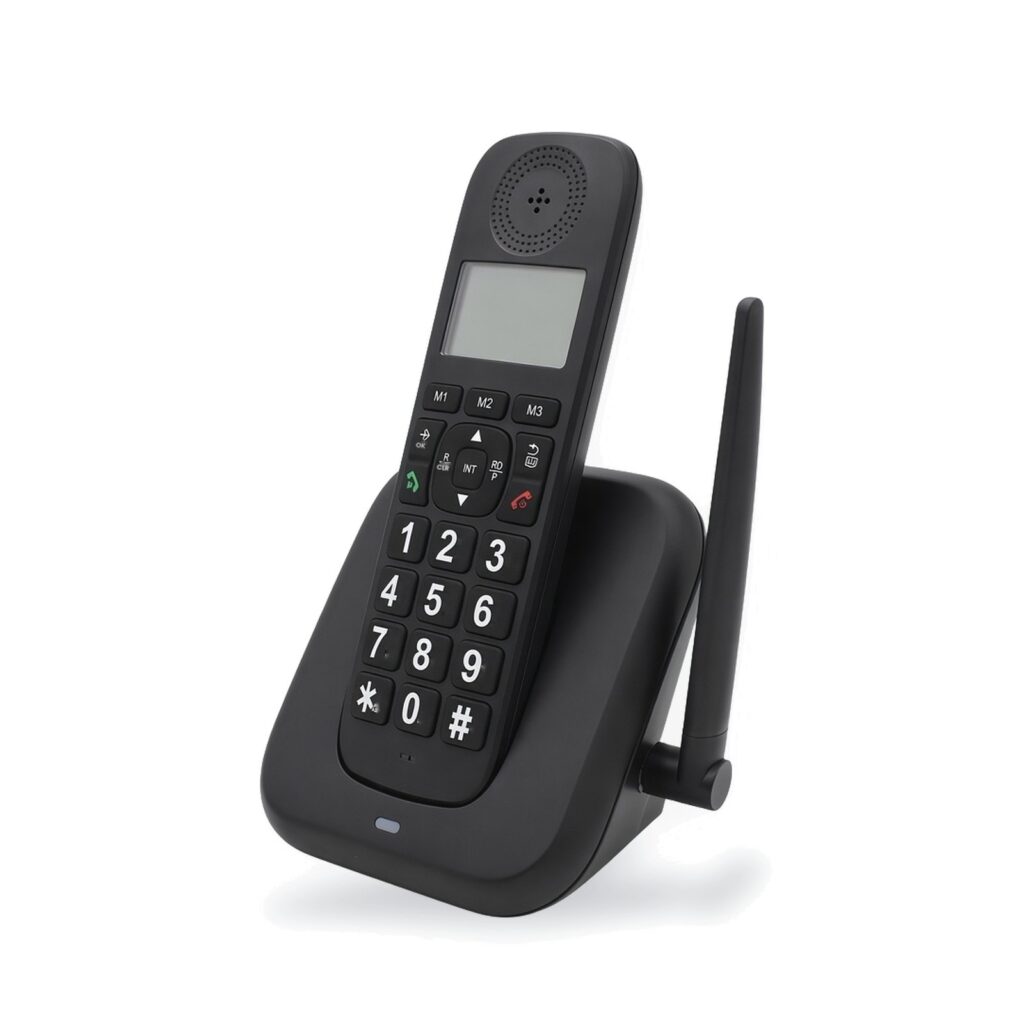
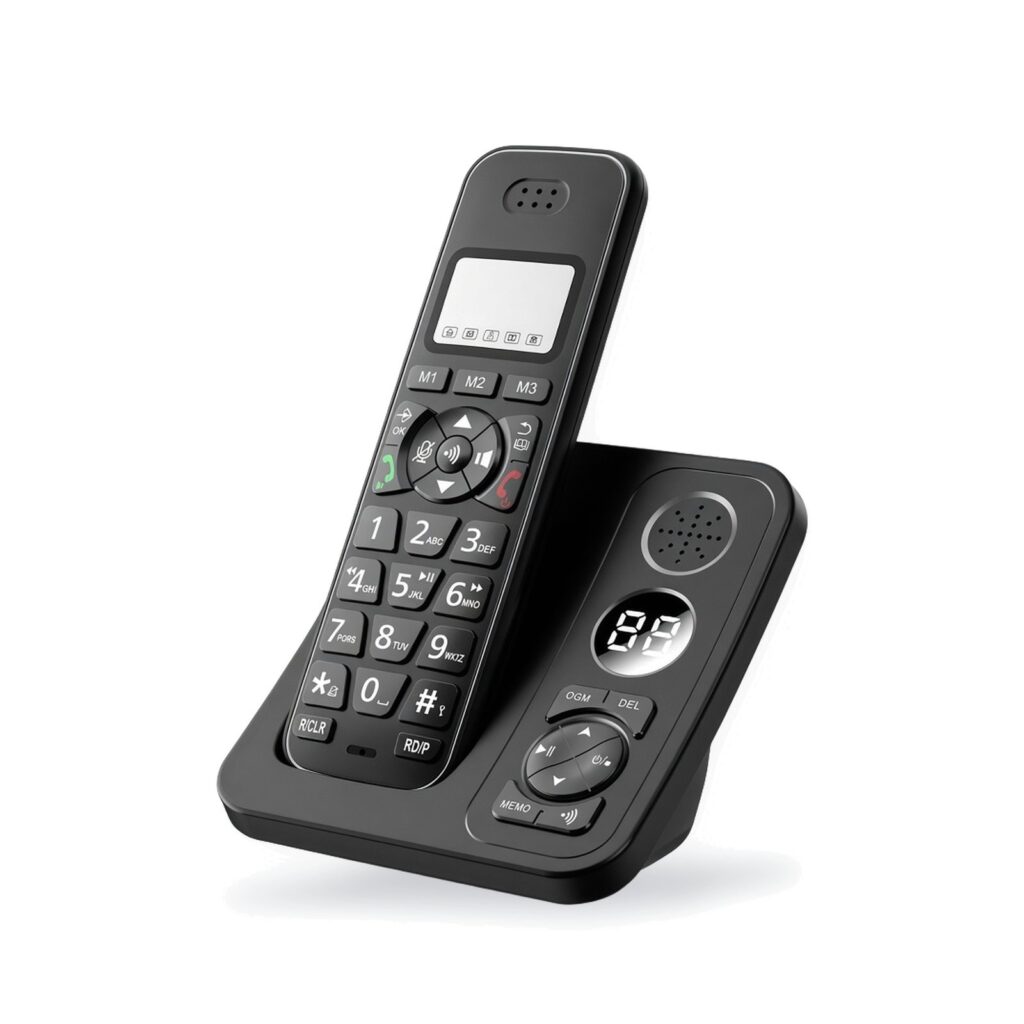
Useful, widely requested features include a phonebook, a call log, speakerphone, intercom between handsets, call transfer, and three-way conference. An integrated digital answering machine matters for small offices that have no PABX voicemail; the CFH-8005 TAM DECT cordless phone, for example, lists a 60-minute digital answering machine, a backlit LCD and 50 phonebook memories. The CFH-8001 DECT cordless phone lists 16 display languages, 50 phonebook memories, intercom and call transfer, and three-way conference. Specify only the features your buyers will train staff to use — extra menus that nobody needs still have to be tested and translated.
4. Power, language and everyday durability
Ask for talk time and standby time on the datasheet, and confirm the charger type and spare-battery policy. If you sell into several countries, require a multi-language display and a language list in the quotation (the CFH-8001 lists 16 languages). Colour options, logo printing and packaging belong in the OEM brief; they are easier to lock at sampling than after mass production has started.
Certification and labelling for cordless imports
A cordless phone is radio equipment. In the European Union it is placed on the market under the Radio Equipment Directive (2014/53/EU) with a CE mark, a declaration of conformity and a technical file; the Restriction of Hazardous Substances (RoHS) Directive also applies. In the United States a DECT 6.0 telephone is an intentional radiator and typically needs FCC Certification and an FCC ID, which is a different process from the Supplier’s Declaration of Conformity used for many purely wired devices. A safety listing such as ETL (an Intertek NRTL mark) may be required by retailers or insurers; it does not replace the FCC grant. Our guide to telephone certifications (CE, FCC, ETL and RoHS) explains how importers should ask for evidence.
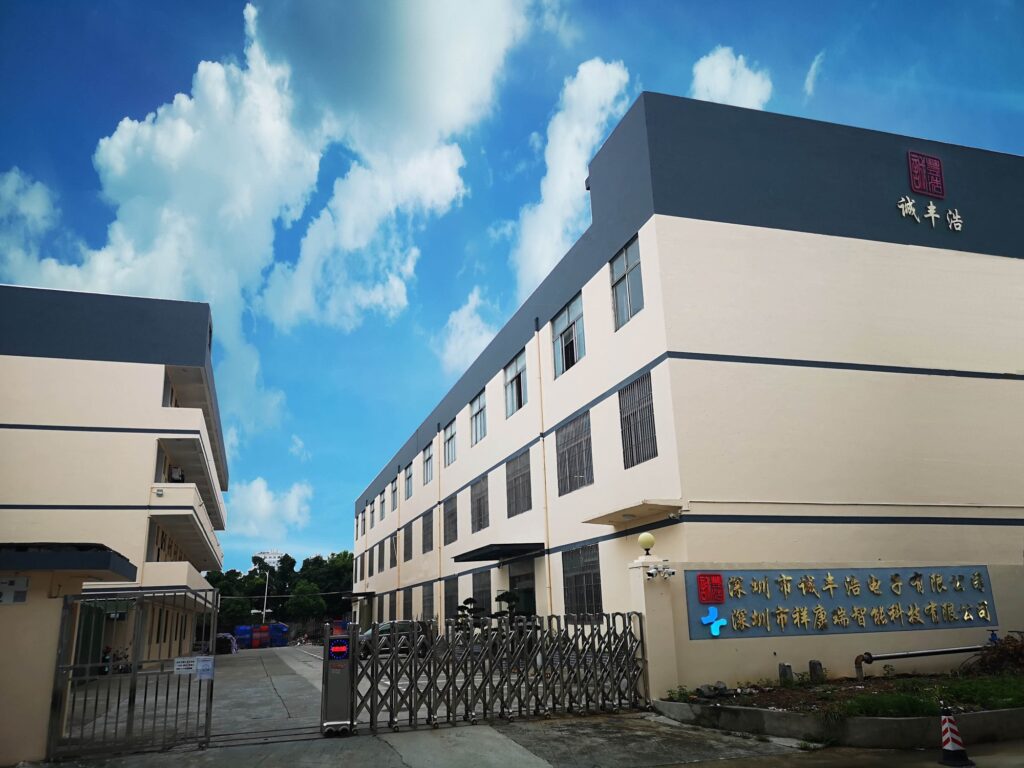
Cheng Feng Hao Electronics, the CFH brand factory in Shenzhen, operates ISO 9001:2015 and ISO 14001:2015 management systems and holds BSCI and ETL certifications. Product-level CE, FCC, RoHS and other market tests are arranged to the destination you specify. Do not ship a first container on a verbal assurance that a model will pass.
When a cordless phone is the wrong tool
If staff never leave a desk, a corded caller ID phone or a basic corded phone is simpler, has no battery to maintain, and keeps working during a local power cut if the telephone line is still powered. If the site has no copper line at all, a 4G fixed wireless desk phone may be a better primary device than a DECT base waiting for a landline. Hotels usually specify a wired guest-room telephone with service keys and a message-waiting lamp; see the hotel phone buying guide.
How to brief a factory
- Name the target countries and the expected annual quantity per country.
- State the line type (PSTN / PABX / ATA) and whether IP DECT is in or out of scope.
- List required handsets per base, must-have features, colours, logo and packaging language.
- Attach any retailer or carrier approval list you must meet (CE, FCC ID, ETL, and so on).
- Ask for a sample, a test plan, and a written list of certificates included in the unit price.
Cheng Feng Hao was founded in 2003 and established its factory in 2010. The company has 250+ employees and a 30,000 m² production area in Longgang, Shenzhen, and supplies OEM and ODM telephones under the CFH brand. The published minimum order quantity is 3,000 pieces per model for this category. Email the brief to sales1@skhelc.com or use the contact form.
Frequently asked questions
Is a DECT cordless phone better than an analog cordless phone for business?
Yes, for almost all new business purchases. DECT offers a reserved radio band, stronger multi-handset support and a clearer certification path. Analog cordless sets may still appear as low-cost replacements, but they are a weak basis for a new import programme.
Can I use a European DECT phone in the United States?
No. EU DECT uses 1880-1900 MHz; US and Canadian DECT 6.0 uses 1920-1930 MHz. You need a version designed and authorized for that market, including the correct FCC equipment authorization.
How many handsets can one DECT base support?
It depends on the model. Do not assume a number from a different brand. Ask the manufacturer for the registered-handset limit and the simultaneous-call limit, and size the system from those two figures.
Do cordless phones need CE or FCC approval?
Yes. They are radio devices. The EU route is CE marking under the Radio Equipment Directive (and RoHS). The US route for a DECT 6.0 telephone is typically FCC Certification with an FCC ID. ETL is a safety listing and is separate. Details are in our telephone certification article.
What information should I send to get a cordless-phone OEM quote?
Target market, quantity, line type, handset count, must-have features, colour, logo, packaging, and the certificates you need. Cheng Feng Hao’s published MOQ for this category is 3,000 pieces per model. Write to sales1@skhelc.com.
Need a DECT cordless phone quoted for your market?
Tell us the destination country, how many handsets you need and whether you want a standard or answering-machine model. We manufacture OEM and ODM DECT cordless phones at our Shenzhen factory. Email sales1@skhelc.com or request a quote.
Related reading: OEM vs ODM telephone manufacturing · CE, FCC, ETL and RoHS for importers · Caller ID phone buying guide.