
A hotel phone is not a slightly prettier office telephone. Guest-room sets need one-touch keys to the front desk and hotel services, a message-waiting lamp that works with the property’s PBX, a face that a guest can understand without a manual, and a construction that survives daily housekeeping. This buying guide walks procurement teams, owners and importers through the decisions that actually affect guest experience and total cost: analogue vs VoIP, service-key count, PBX compatibility, durability, and what to put in an OEM brief.
Key takeaways
- Start from the PBX or hotel phone system you already have (or will install): analogue guest rooms and SIP/VoIP rooms are different product families.
- Specify guest-service keys, a message-waiting lamp, flash/recall timing, and desk or wall mounting in the RFQ, not as afterthoughts.
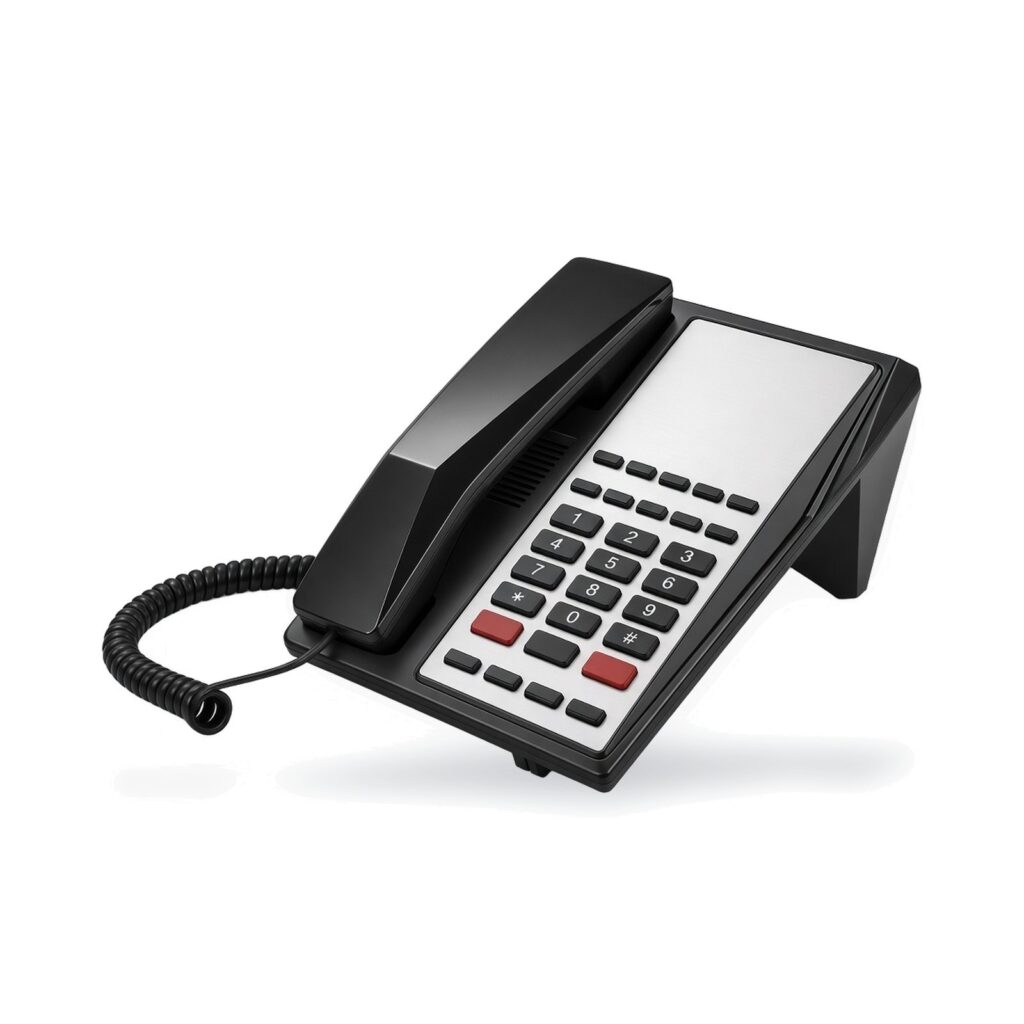
- On Cheng Feng Hao’s SKH-HT99B hotel telephone, published options include 5, 10 or 15 one-touch service keys, a message-waiting lamp, speakerphone, music on hold, and PABX-compatible flash timing.
- OEM branding (logo, colour, packaging and language) should be signed off on the sample, together with any face artwork the property wants guests to see.
- Plan certifications for every destination country in the roll-out, especially if you also specify cordless handsets in the room.
What makes a hotel phone different
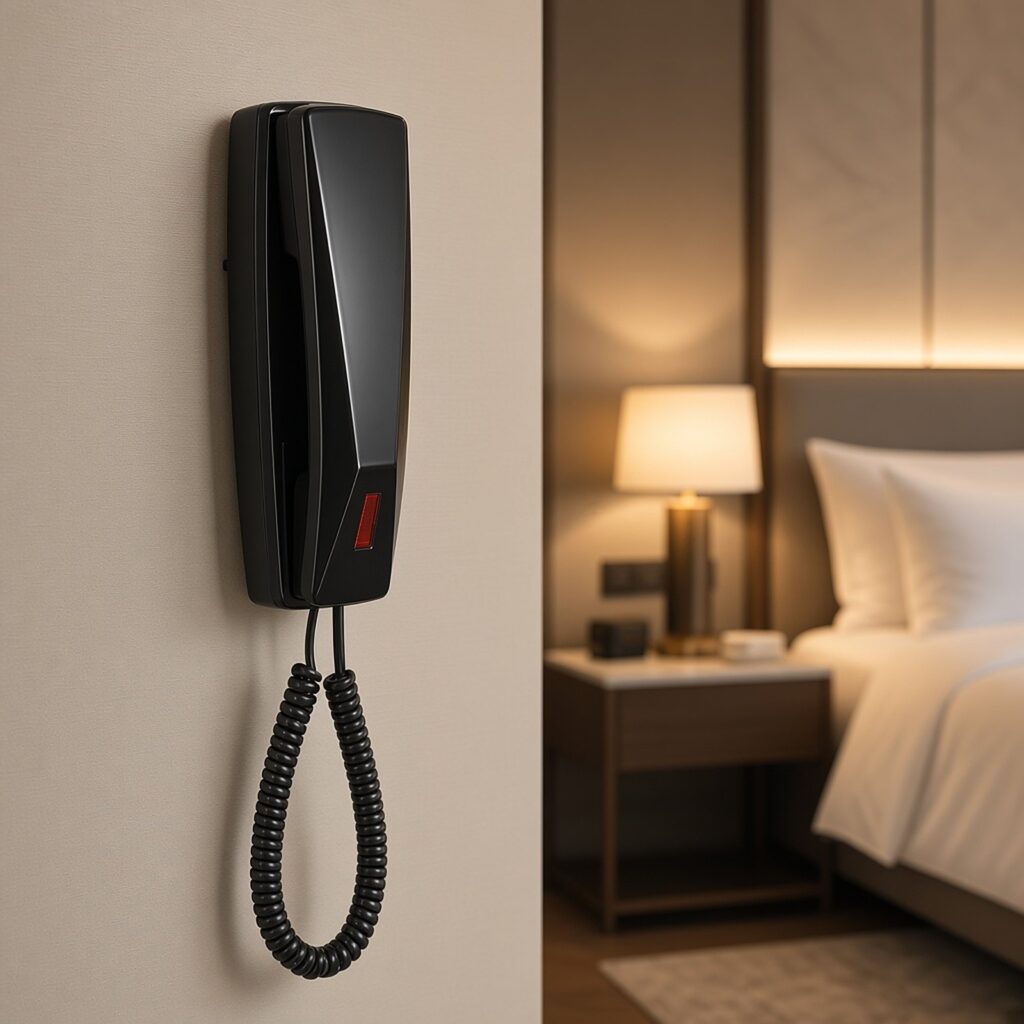
In a guest room the telephone is a service terminal. Guests use it to reach the front desk, housekeeping, room service or an emergency number, to retrieve voicemail, and sometimes to make an outside call. Housekeeping wipes it every day. Engineering may wall-mount it in a bathroom or corridor. The PBX, not the phone, usually owns voicemail and call accounting. That is why hospitality buyers talk about guest service keys, message-waiting indicators (MWI), faceplates or printed faces, and PABX compatibility rather than about a large consumer feature list.
A standard caller ID desk phone can work at a back office or a staff extension. At the bedside it often fails the usability test: too many menus, no dedicated Front Desk key, and no lamp the PBX can light when a message is waiting. Buy a set that was designed as a hotel phone.
Analog, PABX and VoIP: choose the network first
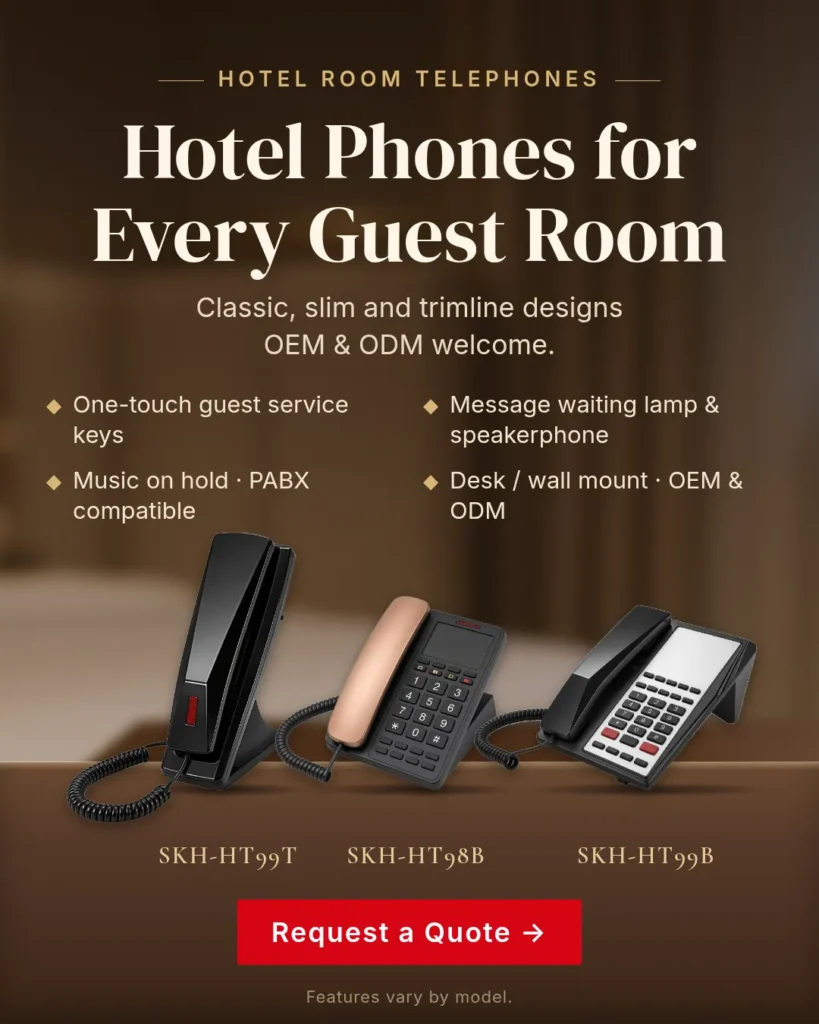
Most rooms in operation today still use an analogue extension from a hotel PBX or hybrid system. An analogue hotel telephone is line-powered, straightforward to replace, and familiar to engineers. It must support the flash/recall timings and message-waiting method (commonly a high-voltage neon or LED lamp, sometimes a line-reversal or FSK method) that the PBX uses. The SKH-HT99B lists PABX compatibility, adjustable flash time (1000 / 600 / 300 / 100 ms), tone/pulse dialling, last-number redial, speakerphone and music on hold — the sort of control set engineers expect on an analogue guest-room phone.
Properties that have moved the room to a data network need a SIP or other VoIP hotel telephone, with Power over Ethernet, the correct message-waiting signalling, and often a different face layout. That is a separate specification; do not assume an analogue body can be converted with an adapter and still offer a clean guest experience. If you are only changing the back-office or admin phones, Cheng Feng Hao’s IP / SIP phones may be relevant, but guest-room VoIP should still be written as its own line item.
Guest service keys, faces and message waiting
How many service keys?
Fewer keys are easier for guests and cheaper to print; more keys are useful in full-service or resort properties that want Restaurant, Spa, Concierge, Valet and similar shortcuts. A common commercial range is 5, 10 or 15 programmable keys. The SKH-HT99B lists “5 or 10 or 15 one-touch memory service” on its specification, so you can match the key count to the property type rather than forcing one layout everywhere. Select the labels in the same language or languages the guest will read, and keep the front-desk or operator key visually obvious.
Face artwork
Many hotel phones use a printed face or a replaceable paper or plastic insert so the property can show its name, logo and service titles. Even when a catalogue page does not use the word faceplate, you should still put face artwork in the OEM brief: languages, brand marks, and whether engineering must be able to change inserts in the field. Cheng Feng Hao’s standard OEM offer includes logo, colours, packaging and display language; if you need a custom printed face, say so in the first quotation request so it is sampled and costed.
Message-waiting lamp
A blinking lamp is how most guests learn that the front desk has left a voicemail. Confirm that the phone’s MWI circuit matches the PBX (neon, LED, voltage and polarity). If the lamp does not work on the first sample, fix it before you roll out a hundred rooms — this is one of the most frequent installation complaints in hospitality telephony. The SKH-HT99B lists a message-waiting lamp as a key feature.
Other features worth specifying
| Feature | Why it matters | What to write in the RFQ |
|---|---|---|
| Speakerphone | Guests can talk without lifting the handset; useful on a desk phone | Required or not required; volume steps if you care |
| Desk and wall mount | Bathrooms, corridors and accessible rooms often need a wall bracket | Desk, wall, or both, with the mounting hardware included |
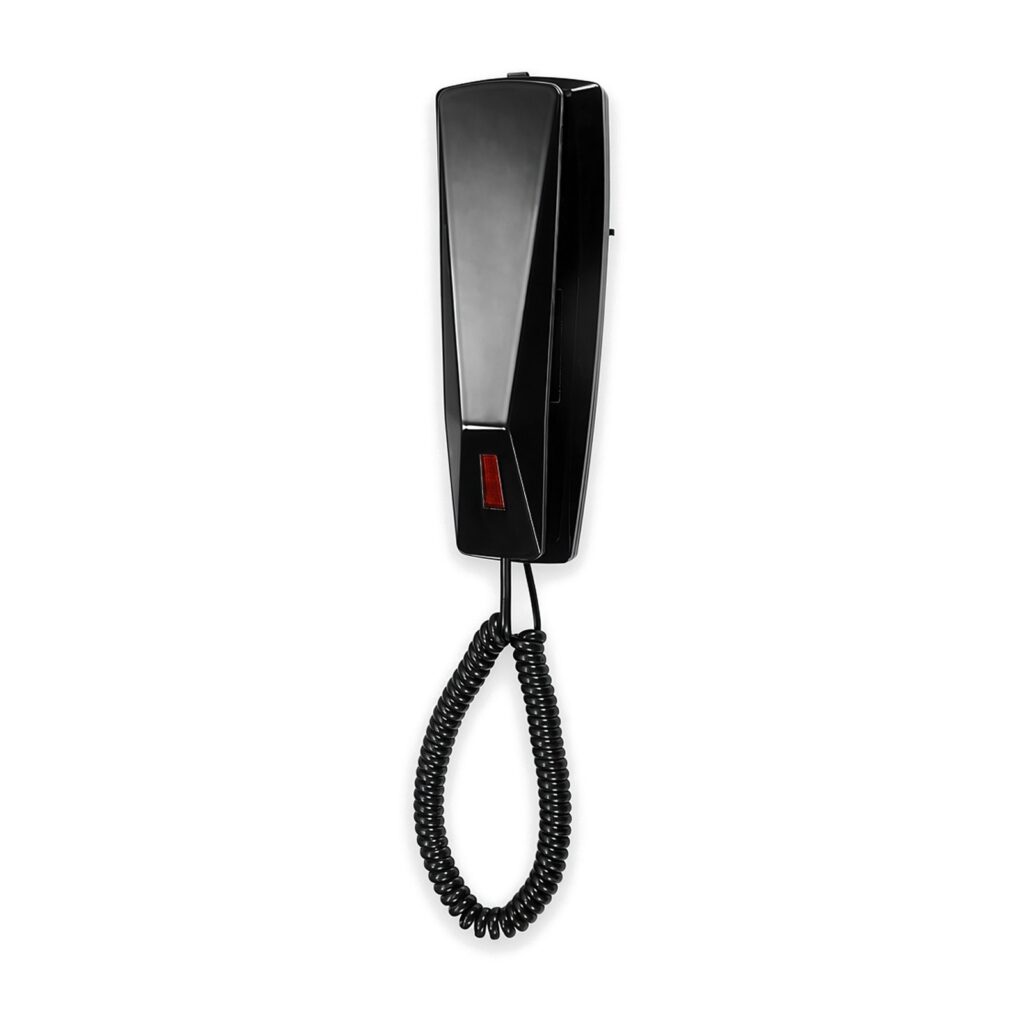
| SOS or emergency key | Some properties want a clearly marked emergency button | The SKH-HT99T lists an SOS key, last-number redial, and desk/wall mounting |
| Flash / recall timing | Must match the PBX for transfer and voicemail retrieval | List the PBX type and the required flash times |
| Tone / pulse dialling | A few legacy systems still need pulse | Tone, pulse, or selectable |
| Handset cord and robustness | Housekeeping and guests stress the coiled cord and hook switch | Spare cords, spare handsets, and a parts list for year two |
| Hearing accessibility | Volume control and hearing-aid compatibility are expected in many markets | State any accessibility standard your brand or local law requires; do not assume it |
Two-line guest phones still appear in some business hotels, but many properties now standardise on a single line plus mobile coverage. Only specify two lines if the room product and the PBX actually support them. Data ports on the side of older hotel phones are largely unused in rooms that already have Wi-Fi and USB charging; do not pay for a port you will not wire.
Room roll-out, spares and total cost
Price per unit is only the start. Add face printing, programming of service keys (done in the factory, on site, or both), installation labour, and a spare pool. A practical spare rate is a small percentage of the room count, plus extra handset cords. For a chain roll-out, freeze one approved sample per brand standard and forbid silent substitutions. If you operate in several countries, do not assume one SKU will carry every safety and radio mark; wired analogue hotel phones and cordless in-room handsets have different approval paths.
Cordless in-room handsets can improve the guest experience in suites, but they introduce batteries, chargers, radio certification (see the cordless phone guide) and a loss of line power during an outage. Many hotels still prefer a corded bedside phone for that reason, sometimes with a second wall phone in the bathroom.
What to send a manufacturer
- Property type and room count (or first-order quantity, if you are an importer).
- PBX or hotel phone-system make, and whether the room is analogue or SIP.
- Required service keys and the exact labels, in each language.
- Message-waiting method, flash times, and desk/wall mix.
- Colour, logo and face artwork, plus packaging language.
- Destination countries and the certificates you need.
- Whether you want factory programming of numbers, or will programme on site.
Cheng Feng Hao manufactures a range of hotel phones as OEM and ODM products, with a published MOQ of 3,000 pieces per model. The factory, in Longgang, Shenzhen, was established in 2010; the company was founded in 2003. Email sales1@skhelc.com with the list above, or use the contact form.
Frequently asked questions
What should I look for in a hotel phone?
Compatibility with your PBX, the right number of guest-service keys, a working message-waiting lamp, a face guests can understand, desk or wall mounting as needed, and a build that will survive housekeeping. Speakerphone, SOS keys and OEM face artwork are common options.
How many guest service keys does a hotel telephone need?
It depends on the property. Many hotels standardise on 5, 10 or 15 one-touch keys. Cheng Feng Hao’s SKH-HT99B lists 5, 10 or 15 one-touch service memories, so you can choose a layout that matches the services you actually offer.
Will a normal office phone work in a guest room?
It can physically connect, but it usually lacks hospitality service keys and a PBX message-waiting lamp, and the face is harder for guests to use. Specify a hotel telephone for guest rooms and keep ordinary caller ID or basic phones for back-of-house extensions if you wish.
Can hotel phones be customised with a logo?
Yes. Cheng Feng Hao offers OEM customisation of logo, colours, packaging and display language. If you also need a custom printed face or a replaceable insert, include that requirement in the quotation so it can be sampled.
What is the MOQ for hotel phones?
The published minimum order quantity is 3,000 pieces per model. Tell us the room count, key layout and destination market when you request a quote.
Planning a guest-room telephone roll-out?
Share your PBX type, how many service keys you need and the destination market. Browse hotel phones or email sales1@skhelc.com — or send the brief on the contact page.
Related reading: OEM vs ODM telephone manufacturing · DECT cordless phones for business · Caller ID phones for offices and seniors.