
EU DECT vs DECT 6.0 is not a choice between an older phone and a newer one. It is a choice between two regional radio plans that sit in different frequency bands, need different approvals, and will not talk to each other. In Europe and many other markets, a DECT cordless telephone uses the 1880–1900 MHz band. In the United States and Canada the equivalent standard is DECT 6.0, in the 1920–1930 MHz unlicensed PCS band. A handset and base built for one band will not legally or reliably work in the other. If you import cordless phones for both regions, plan two radio SKUs, two nameplates and two certification packages — not a single worldwide model.
Key takeaways
- EU DECT vs DECT 6.0 is a frequency-plan difference, not a generation upgrade. The “6.0” is a North American marketing name, not a later version of the ETSI standard.
- EU DECT uses 1880–1900 MHz, as designated in CEPT ERC/DEC/(94)03 and ETSI’s DECT radio standards. DECT 6.0 uses 1920–1930 MHz under FCC Part 15 Subpart D and, in Canada, ISED RSS-213.
- The two radios are not interoperable. Spare handsets and bases must match the destination band. The wrong version can interfere with licensed mobile networks and is prohibited in both regions.
- A single radio usually cannot legally or practically serve both markets, so importers need separate SKUs, labels and certificates (CE in the EU; an FCC ID in the US).
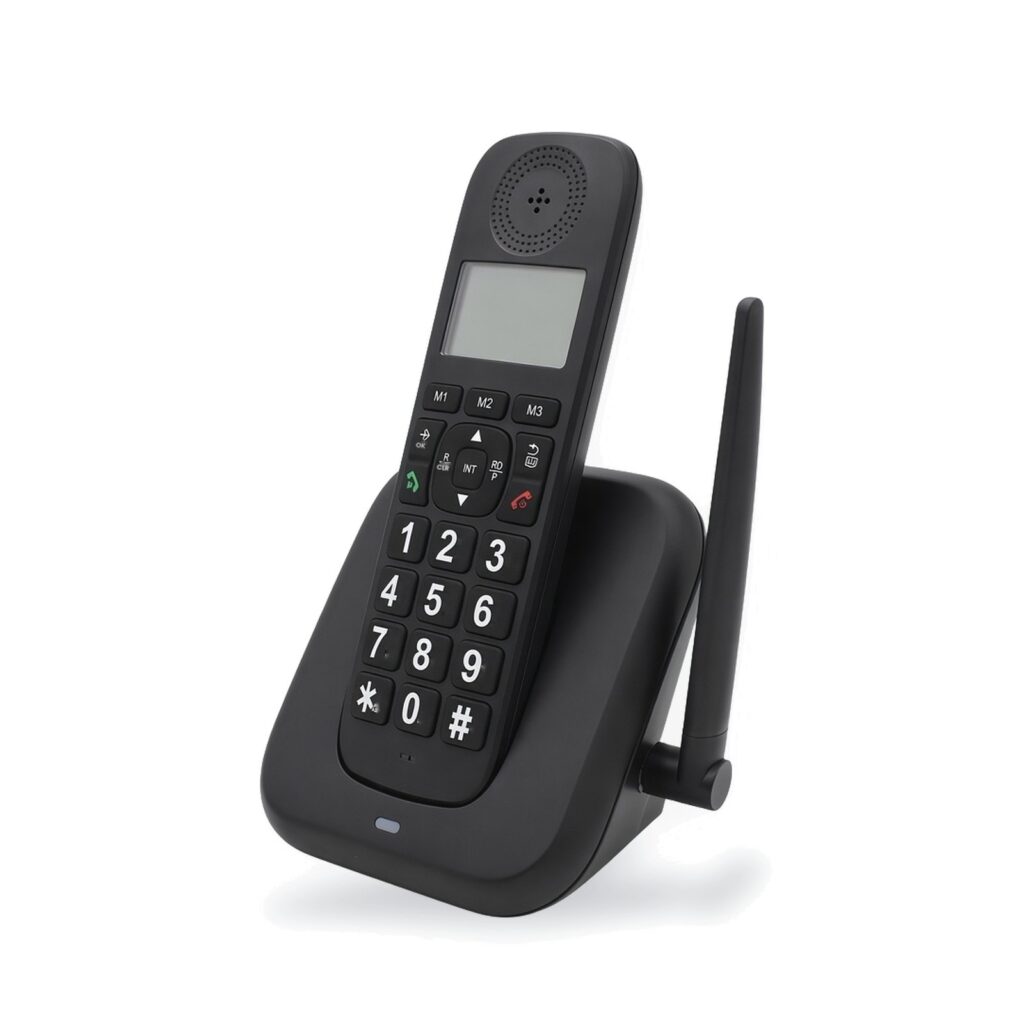
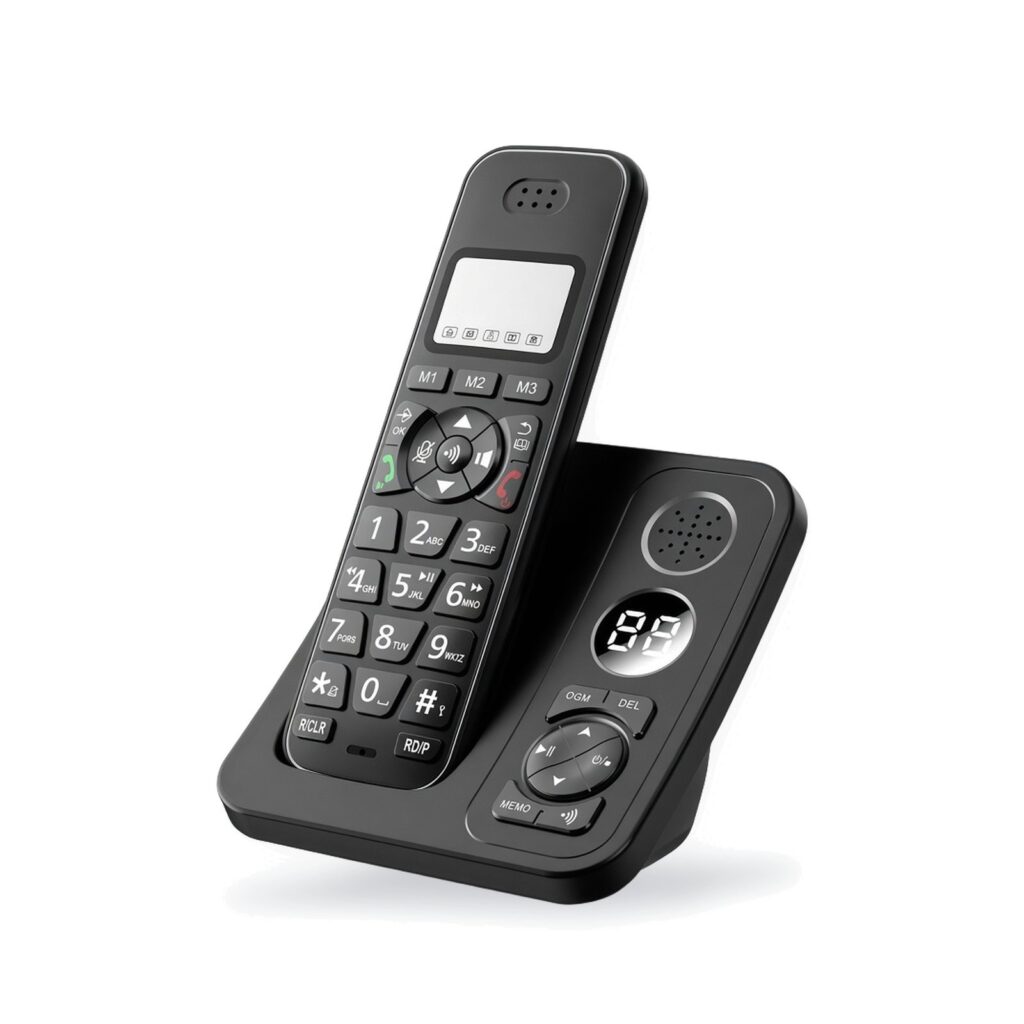
- State destination countries in the first OEM quotation. Cheng Feng Hao manufactures DECT cordless phones such as the CFH-8001 and CFH-8005 TAM as OEM/ODM platforms; agree the RF version before tooling is frozen.
What DECT and DECT 6.0 actually mean
DECT stands for Digital Enhanced Cordless Telecommunications, a digital cordless standard developed by the European Telecommunications Standards Institute (ETSI). A typical system has a base and one or more handsets that share a reserved band, which is why a well-designed DECT system usually coexists better with Wi-Fi than older analogue cordless phones in the 2.4 GHz or 5.8 GHz ISM bands. For handset count, coverage and analogue versus IP DECT, see how to choose a cordless phone for business.
DECT 6.0 is not a newer edition of DECT. It is the marketing name used in the United States and Canada for DECT equipment in the 1920–1930 MHz band. The “6.0” was chosen so the product would not look older than 2.4 GHz and 5.8 GHz analogue sets already on North American shelves. It is not a sixth generation of the ETSI standard, and it will not work with a European 1880–1900 MHz base. When a quotation or carton says only “DECT”, ask which frequency plan is actually fitted.
Frequency bands compared
The essential EU DECT vs DECT 6.0 difference is the radio spectrum, not the keypad layout:
| Plan | Frequency band | Where it is used | Typical legal starting point |
|---|---|---|---|
| EU / ETSI DECT | 1880–1900 MHz | EU/EEA, and many other countries that have adopted this 20 MHz plan | ERC/DEC/(94)03; ETSI EN 301 406; EU Radio Equipment Directive 2014/53/EU (CE marking) |
| DECT 6.0 (US) | 1920–1930 MHz | United States (unlicensed PCS / UPCS band) | 47 CFR Part 15 Subpart D; FCC Certification and an FCC ID |
| DECT 6.0 (Canada) | 1920–1930 MHz | Canada (licence-exempt PCS) | ISED RSS-213; cordless bases also need applicable CS-03 requirements |
ETSI’s DECT radio standard places ten RF carriers, at 1.728 MHz spacing, in the 1880–1900 MHz service band. The US and Canadian band is only 10 MHz wide, so a DECT 6.0 radio has fewer carriers and must meet different power and emission limits. That is one reason a factory will usually design a separate RF version rather than “retune” a European board for North America.
Many markets outside Europe — including the United Kingdom and, commonly, Australia, New Zealand and much of Asia — also use the 1880–1900 MHz plan, but do not assume that. A smaller group of countries uses different or additional DECT allocations. If you sell into Japan, Korea, Taiwan or parts of Latin America, check the national frequency table before you copy a European RF bill of materials.
Why the two radios are not interoperable
Because the carriers do not overlap, an EU-band handset cannot camp on a DECT 6.0 base, and a DECT 6.0 handset cannot camp on a European base. Pairing, roaming and intercom all assume the same radio plan. Treating “DECT” as a universal spare-parts pool is how mixed shipments leave distributors with unsaleable handsets.
The legal problem is sharper than the technical one. A DECT 6.0 telephone operating in Europe sits in spectrum used by licensed mobile services (historically the 3G/UMTS uplink starting at 1920 MHz). Romania’s ANCOM lists DECT 6.0 terminals among frequently found non-conforming equipment because they produce harmful interference, and Belgium’s BIPT has warned against using US or Canadian DECT 6.0 phones on the European market, including the risk of seizure. See ANCOM’s note and the BIPT warning on DECT 6.0. In the other direction, a 1880–1900 MHz European DECT radio is not authorised as an unlicensed PCS device under FCC Part 15 Subpart D or ISED RSS-213.
A CE mark on a European DECT phone does not authorise US sales. An FCC ID on a DECT 6.0 phone does not authorise EU sales. For declarations of conformity, FCC grants, ETL listings and RoHS, see the telephone certification guide for importers.
Why importers need two SKUs
For a standard OEM or ODM cordless phone, a single radio usually cannot serve both markets legally or practically. The RF filter, front-end and type-approval file are built around one band. Plan one SKU for 1880–1900 MHz markets and one SKU for 1920–1930 MHz markets. That means more than two radio modules:
- Separate certification packages — CE under the Radio Equipment Directive for the EU-band version; FCC Certification and an FCC ID for the US DECT 6.0 version; ISED RSS-213, and CS-03 on the base, if you sell into Canada.
- Separate nameplates and manuals — CE marking and the required manufacturer or EU importer details on the EU SKU; the FCC ID and US labelling on the DECT 6.0 SKU. Do not print “DECT 6.0” on an 1880–1900 MHz product, or a CE mark on a radio that has no EU file.
- Separate packing and carton marks — model codes and barcodes should make it obvious which radio is in the box. Do not mix the two versions in one master carton.
- Matching after-sales stock — spare handsets and bases must be warehoused by band.
- Forecasts and MOQ by version — Cheng Feng Hao’s published minimum order quantity is 3,000 pcs per model (500 pcs only for the TC-001 and TC-002 tablet phones). Treat each radio version as its own model on the first order.
Catalogue platforms such as the CFH-8005 TAM (a DECT handset with a 60-minute digital answering machine) and the CFH-8001 (intercom, call transfer, three-way conference and a 16-language display) are typical starting points for OEM cordless programmes. Colour, logo, packaging and menu language can be customised; the frequency plan still has to be chosen first.
Certification and labelling for each radio version
- European Union. A DECT telephone is radio equipment under the Radio Equipment Directive, usually using current harmonised standards including EN 301 406. The importer must be able to show an EU declaration of conformity and the technical documentation, and the product must carry the CE mark and the required manufacturer or importer details.
- United States. A DECT 6.0 cordless phone is an intentional radiator in the 1920–1930 MHz band. It typically needs FCC Certification and an FCC ID, not only a Supplier’s Declaration of Conformity. The ID on the nameplate must match the grant. A European CE radio file does not substitute for that grant. See the FCC page on equipment authorization.
- Canada. Licence-exempt PCS devices in 1920–1930 MHz are certified to RSS-213. A cordless telephone base must also meet the applicable CS-03 terminal requirements.
- Great Britain. Confirm the live GOV.UK rules on UKCA and CE marking for your product type. In practice the lawful DECT plan is 1880–1900 MHz, not DECT 6.0.
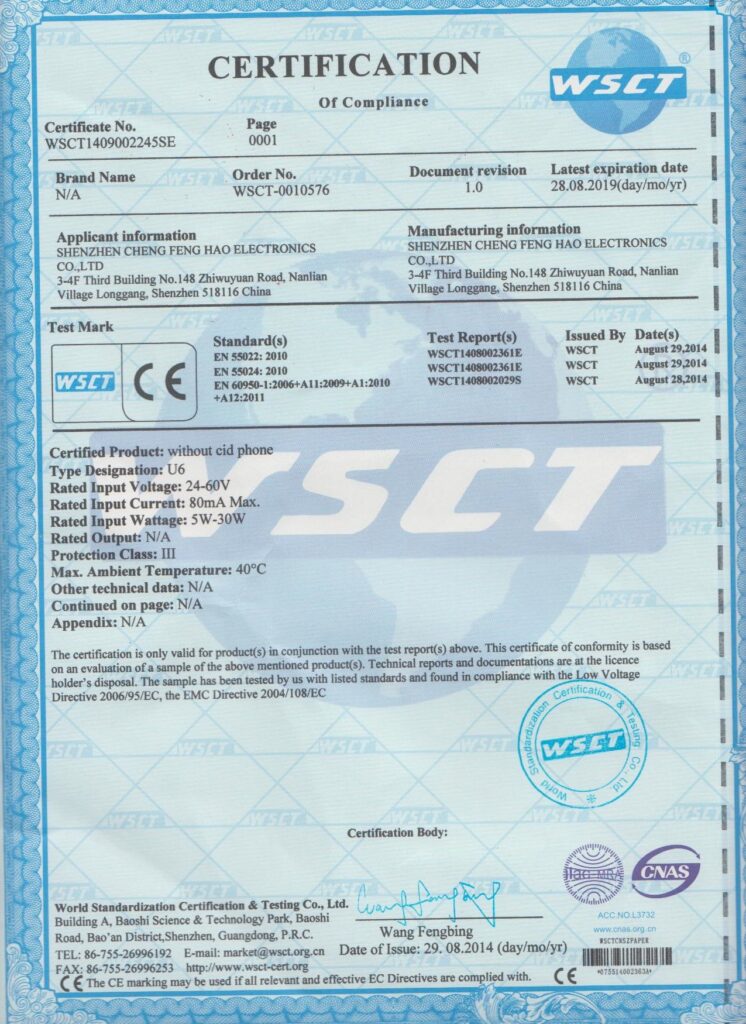
Cheng Feng Hao holds ISO 9001:2015, ISO 14001:2015, BSCI and ETL as company credentials, and publishes factory certificates on the Certificates page. FCC, RoHS and other market certifications are arranged on request for the destination you specify. Those management-system certificates describe the organisation; they are not a substitute for the product radio file of each SKU.
What to put in the factory brief
When you request a quote, include every destination country (not only “Europe” or “America”); the certificates required for each market; whether you need one radio version or both, and how SKUs and carton marks will keep them apart; handset count, coverage and any logo, colour, packaging or language customisation; and who will be named as manufacturer, importer or US responsible party on the labels.
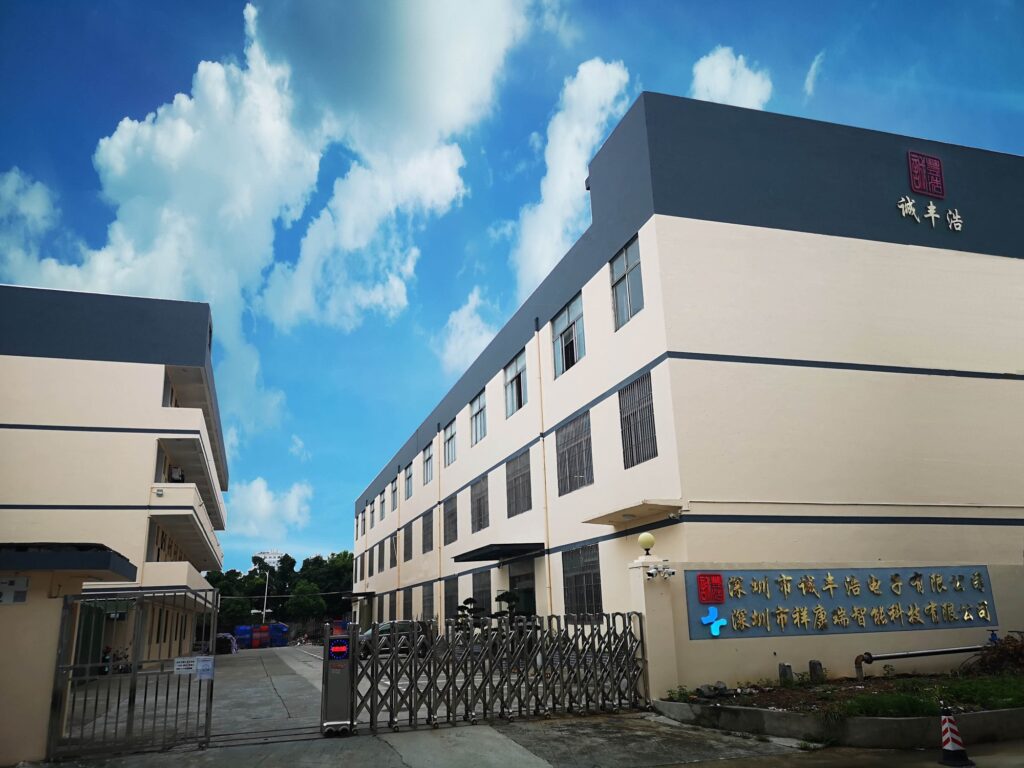
Cheng Feng Hao Electronics, founded in 2003, manufactures OEM and ODM telephones at its factory in Longgang, Shenzhen (established 2010): more than 250 employees, including 10 product engineers, in a 30,000 m² production area. Enquiries sent to sales1@skhelc.com during office hours are answered within 24 hours. For sampling and production steps, see the OEM vs ODM telephone manufacturing guide and the About Us page.
Mistakes that show up after the container sails
- Buying a US retail DECT 6.0 set and reselling it in the EU because the box says “DECT”. Regulators treat that as non-conforming radio equipment.
- Assuming a CE test report covers the United States, or that an FCC ID covers the EU.
- Changing the antenna, housing or power adapter after the radio file is issued, and shipping under the same certificate.
- Printing one generic nameplate for both versions, or packing both radios in one master carton.
- Sending European spare handsets to a North American customer, or the other way around.
If you only sell into 1880–1900 MHz countries, say so. The factory should then quote and certify only that radio, and packaging should not carry DECT 6.0 marking. Adding the United States or Canada later is a new SKU, not a sticker change.
Frequently asked questions
Can I use a DECT 6.0 phone in Europe?
No. DECT 6.0 operates in 1920–1930 MHz, a band used in Europe by licensed mobile services. National regulators, including ANCOM in Romania and BIPT in Belgium, treat US or Canadian DECT 6.0 cordless phones as non-conforming equipment that can cause harmful interference. Buy a telephone designed and CE-marked for the 1880–1900 MHz DECT plan.
Can an EU DECT phone be used in the United States or Canada?
No. A 1880–1900 MHz European DECT radio is not an authorised unlicensed PCS device under FCC Part 15 Subpart D or ISED RSS-213. For those markets you need a DECT 6.0 (1920–1930 MHz) SKU with the corresponding FCC and, if you sell in Canada, ISED approvals.
Are EU DECT and DECT 6.0 handsets compatible?
No. The frequency bands do not overlap, so a handset from one plan will not register on a base from the other. Spare handsets, repeaters and bases have to be ordered for the same band as the installed system.
Is DECT 6.0 a newer or better version of DECT?
No. DECT 6.0 is a North American marketing name for DECT in the 1920–1930 MHz band. The “6.0” is not a later generation of the ETSI standard. Compare the frequency plan and the certificates, not the number on the carton.
What frequency does DECT 6.0 use?
DECT 6.0 uses 1920–1930 MHz in the United States and Canada. Standard European DECT uses 1880–1900 MHz. Some other countries have their own allocations, so confirm the national table before you freeze a design.
Do I need two certifications as well as two radios?
Yes. Each radio version needs the approvals that belong to its markets: typically CE under the Radio Equipment Directive for an EU-band DECT phone, and FCC Certification with an FCC ID for a US DECT 6.0 phone. One file does not cover both.
Need EU DECT and DECT 6.0 SKUs quoted for your markets?
Tell us the destination countries, the certificates you need, and whether you are starting from a catalogue model such as the CFH-8001 or CFH-8005 TAM. Cheng Feng Hao will propose the correct radio versions and a certification plan. Email sales1@skhelc.com or use the contact form.