
A PBX compatible phone is an analogue telephone — or a cordless base on an analogue extension — whose port type and flash (recall) pulse match the private branch exchange in front of it. A datasheet line that says “compatible with all major PABX systems” is not a substitute for that match. If hook flash timing is wrong, hold, transfer and enquiry keys fail, or the PBX treats the pulse as a hang-up. That is a common, avoidable failure in hotel rooms and offices.
This guide is for importers, distributors, hotel and office buyers, and telecom brands specifying an OEM corded or cordless set. It explains PABX compatibility, flash timing, and what to put in an RFQ and a sample-test plan.
Key takeaways
- A PBX compatible phone must sit on an analogue FXS or POTS extension, not a digital or proprietary handset port, and its flash pulse must fall inside the PBX detection window.
- Flash, recall, hook flash and the R button are the same kind of signal: a short break in off-hook loop current, used for hold, transfer and enquiry.
- Timing is regional. ETSI ES 201 729 specifies a terminal break of 90–120 ms (recommended for new designs) or 220–300 ms. BT SIN 351 says the BT PSTN recognises recall at 53–103 ms.
- Some older UK PABX systems expect earth (ground) recall rather than a timed break. A timed-break-only telephone will not signal those systems.
- Specify the PBX model, locale, required flash duration or adjustable range, and a sample test on the live system before you approve a production quantity.
What a PBX compatible phone actually has to match
PBX and PABX describe the same idea. Private branch exchange is the usual North American term; private automatic branch exchange is still common in Europe, the Middle East, Africa and much of Asia, and it is the wording on many telephone datasheets.
An analogue guest-room or desk telephone works only on an analogue extension — the two-wire FXS or POTS port that supplies loop current and dial tone. It will not work on a digital or proprietary handset port, even if the connector looks similar. If the property is moving desks or rooms to IP, you need a SIP desk phone or a gateway, not an analogue set forced onto a digital station port.
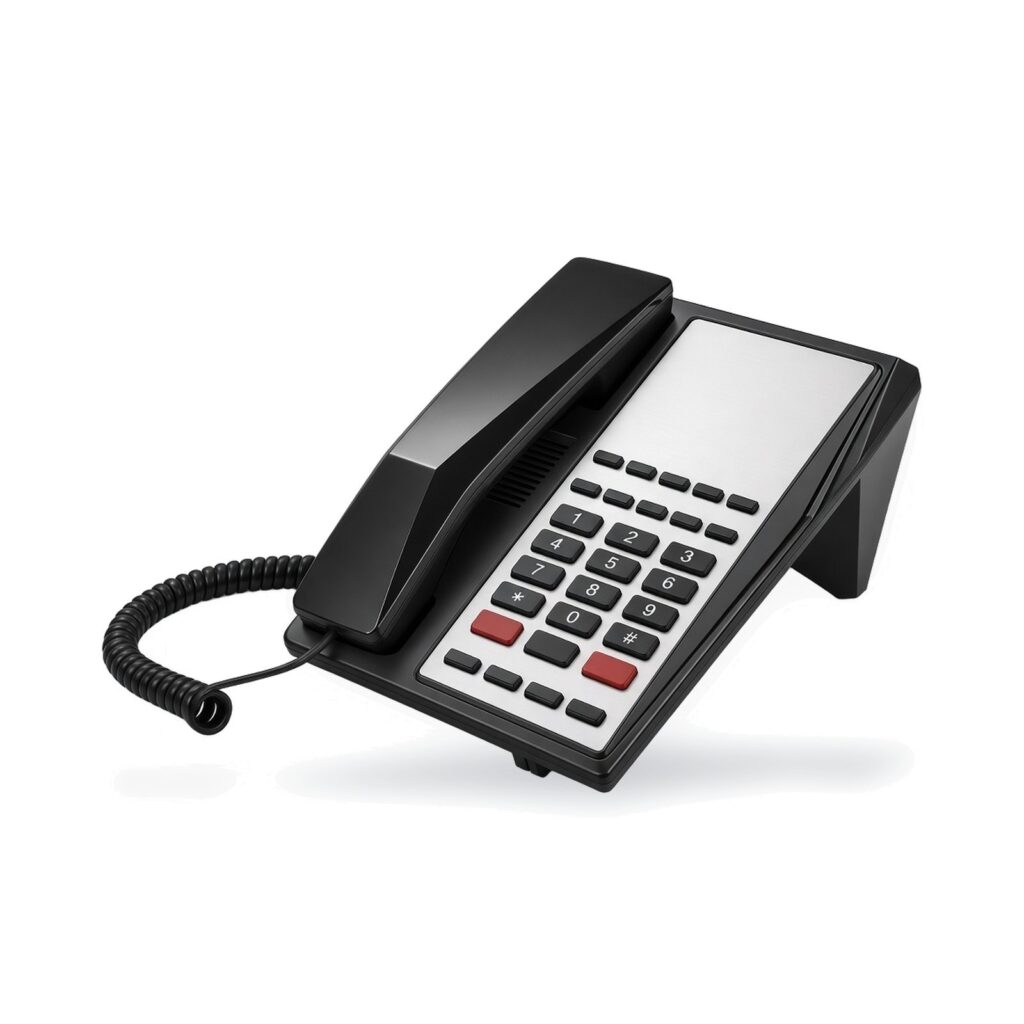
On an analogue port, “PABX compatible” usually bundles several behaviours: DTMF tone dialling (with pulse still listed for older switches); a flash pulse inside the PBX detection window; caller ID type, where the desk needs it (see the caller ID phone buying guide); and, on hotel phones, a message-waiting method that matches the PBX. For faceplates, guest-service keys and mounting, use the hotel phone buying guide.
What flash, recall and the R button actually do
A flash is a short, deliberate interruption of the off-hook loop current: a brief hang-up that is too short for the switch to clear the call, and long enough for it to recognise a command. Modern telephones use a dedicated key so the pulse length is consistent.
The same control is labelled Flash, Recall, R, hook flash, or occasionally Link. In European standards the function is often called register recall or timed break recall (TBR). During a connected call, the user presses the key so the PBX will hold the first party, return dial tone, and accept a transfer or enquiry, usually as DTMF digits after the flash. If the pulse is too short, the PBX ignores it. If it is too long, the PBX drops the call. Both failures are easy to misdiagnose as a defective telephone or PBX when the only issue is hook flash timing.
Hook flash timing: official windows and typical phone settings
There is no single worldwide flash duration. Use the figures below as design windows, then confirm the detection range on the installed PBX.
ETSI ES 201 729 V1.1.1 is the European terminal specification for timed break recall. It requires a break of 90–120 ms, recommended for new designs, or 220–300 ms, with loop current at 1 mA or below. ETSI EG 201 185 adds that networks may recognise 50–130 ms timed break, or a wider hook-switch flash of 75–850 ms.
On the UK public network, BT Suppliers’ Information Note 351 (SIN 351) states that, in the answered state, the BT interface recognises loop current at 1 mA or below for 53–103 ms as a recall signal. That is a PSTN window, not a private-exchange specification, but many UK timed-break designs are still checked against it. A 100 ms setting sits inside both the ETSI recommendation and the BT window; a 110 ms setting sits inside the ETSI recommendation and just above the SIN 351 upper bound, so confirm it on the actual PABX.
PBX vendors expose the other half of the match. Avaya IP Office can use locale default flash-hook minimum and maximum widths, or a per-extension override: shorter breaks are ignored, longer ones are treated as clearing. Ask the installer for that window before freezing the setting.
| Reference or practice | What it specifies | What a buyer should do with it |
|---|---|---|
| ETSI ES 201 729 (terminals) | 90–120 ms (recommended) or 220–300 ms; break current ≤ 1 mA | Use 90–120 ms as the European TBR target unless the PBX says otherwise. |
| ETSI EG 201 185 (networks) | May accept 50–130 ms timed break, or 75–850 ms hook-switch flash | A long North American flash may be rejected on a short-TBR European switch. |
| BT SIN 351 (BT PSTN) | Recall recognised at ≤ 1 mA for 53–103 ms when answered | A UK public-network window; confirm the private exchange separately. |
| Typical OEM analogue phones | Often 100 / 300 / 600 / 1,000 ms (some caller-ID models list 110 ms) | Pick the nearest value inside the PBX window and write it into the RFQ. |
A 600 ms or 1,000 ms flash will often be seen as a hang-up on a European switch listening for a 100 ms timed break, while a short European pulse may be ignored by a North American PBX. A programmable flash is therefore a buying criterion when one platform is sold into more than one region.
Timed break recall is not the same as earth recall
ETSI ES 201 729 notes that an older register-recall method, using an additional wire connected to earth, still exists in some private installations and is outside that timed-break standard. In UK PABX practice this is usually called earth recall or ground recall: the telephone momentarily earths one leg of the line instead of opening the loop for a timed interval. A timed-break-only telephone will not operate those features, and the reverse is also true. The method is less common on new installations than on older UK PABX systems, but it has not disappeared. Confirm whether the switch expects timed break or earth recall, and write that into the specification.
Hotel rooms, office desks and cordless bases
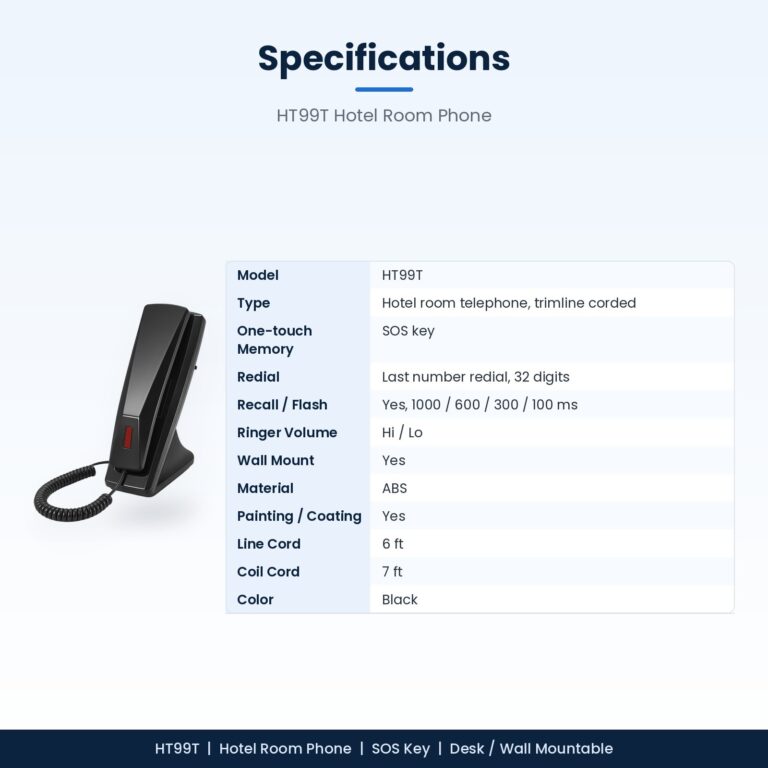
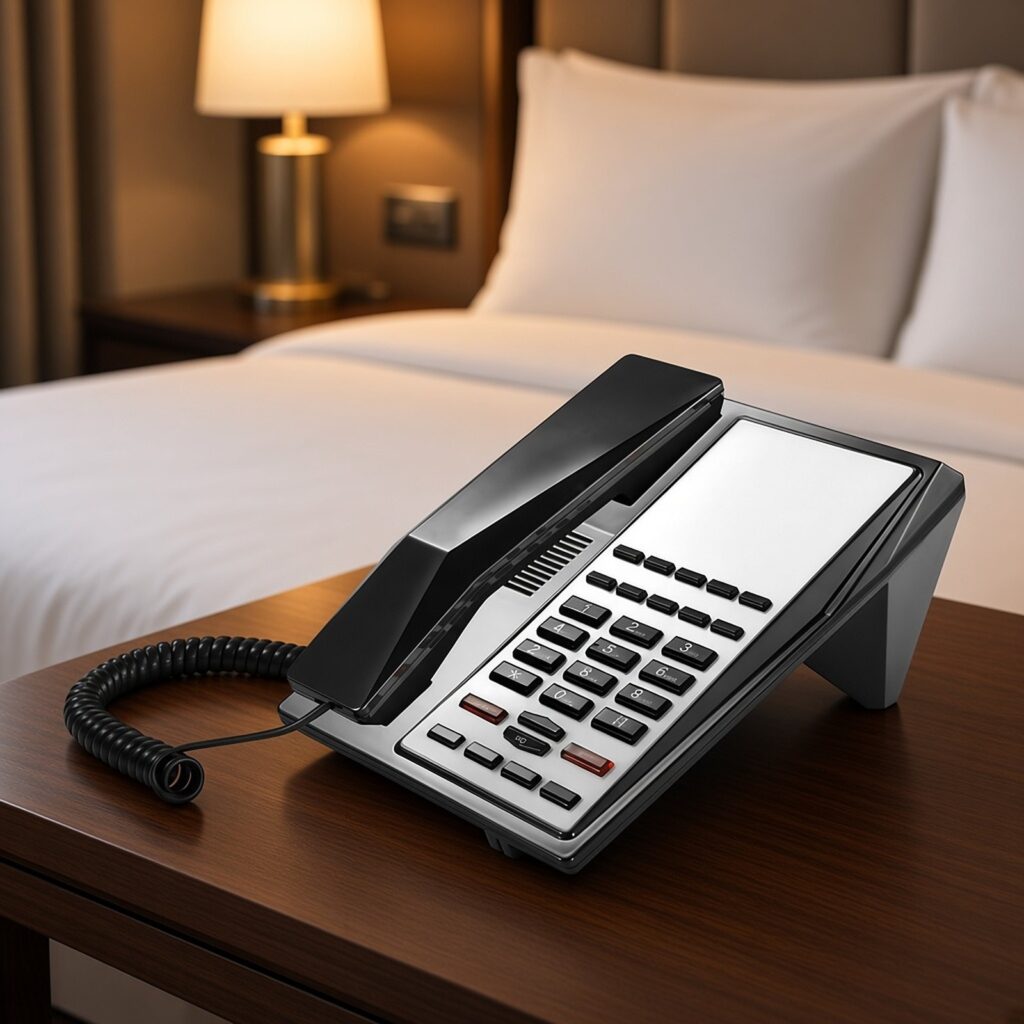
The same electrical rules apply across product types; what changes is the user interface and where the timing is set. Analogue hotel phones are still the typical guest-room extension. The SKH-HT99B and the slimmer SKH-HT99T trim-line both list tone/pulse PABX compatibility and flash time adjustable to 1,000, 600, 300 or 100 ms. Those four values cover short European TBR and the longer pulses often used on North American hotel PBX ports. Set the documented value on the sample and keep it consistent across the room roll-out.
A receptionist or small-business desk has the same transfer and hold need, usually with a visible Flash key. The SKH-181R caller ID telephone lists tone/pulse PABX compatibility and an adjustable flash time of 1,000, 600, 300 or 110 ms. The short option is 110 ms rather than 100 ms, so read the datasheet rather than assuming every analogue SKU shares one table. For offices that have already moved to IP, specify a SIP desk phone instead.
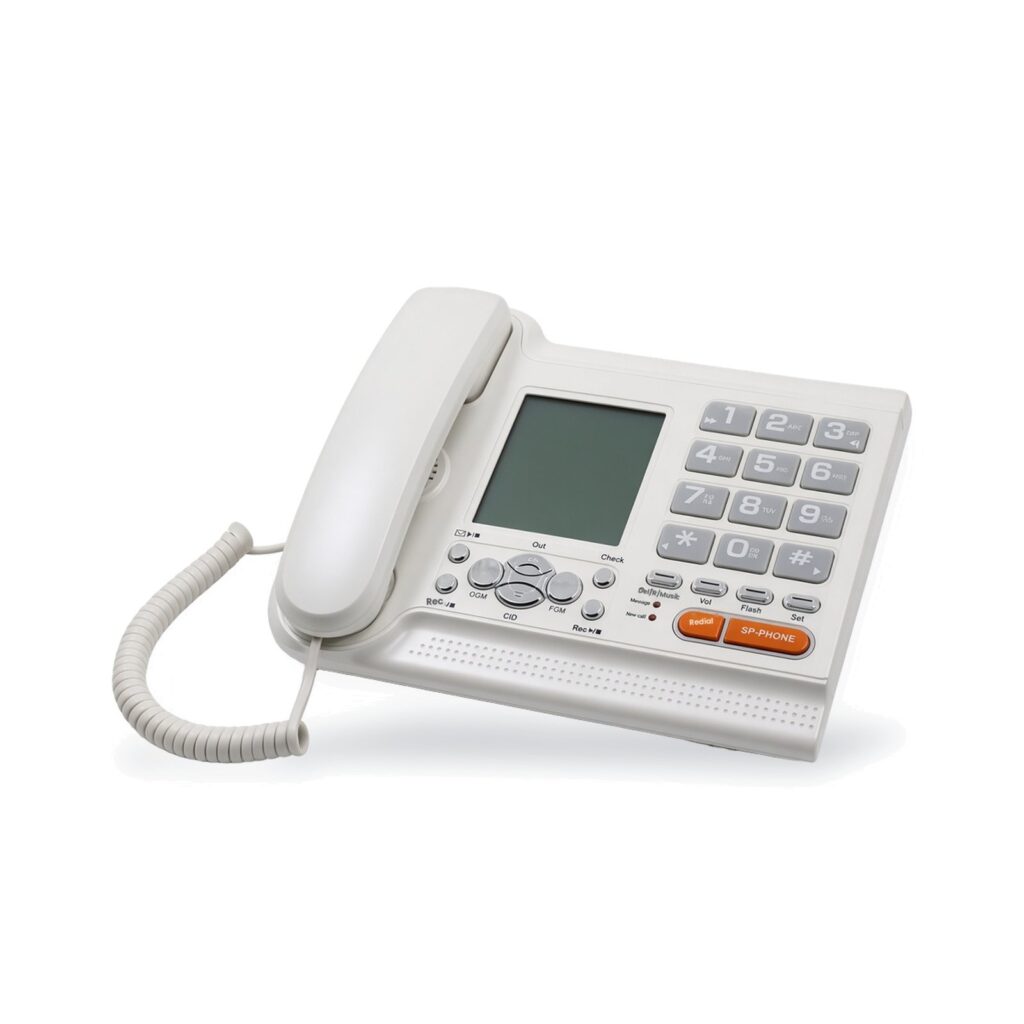
On a DECT cordless phone, the analogue line is presented to the base, and the base — not the handset radio — generates the flash pulse towards the PBX. The CFH-8001 lists a selectable flash time of 100, 300, 600 or 1,000 ms, the same range as the hotel corded sets. If you sell that cordless platform in both Europe and North America, the radio band is a separate SKU decision; see EU DECT vs DECT 6.0.
What to specify in the RFQ and how to test the first samples
Put flash timing in the telephone OEM RFQ and specification sheet alongside product type, markets and certifications, and require the agreed setting in the quotation and the installation note.
- Port type. Analogue FXS or POTS extension — or a SIP model if digital ports are in use.
- PBX or gateway identity. Manufacturer, model and locale if known.
- Recall method. Timed break (flash) or earth/ground recall.
- Required flash duration or detection window. A single value (for example 100 ms or 600 ms) or the PBX minimum and maximum, and a programmable range if the same SKU will be sold into more than one region.
- Related analogue features that must also match: tone or pulse dialling, caller-ID type, and, for hotels, the message-waiting method.
- How the setting is made in production or in the field, and whether it should be factory-preset for a named market.
Test at least one production-intent sample on the live PBX, or on a lab port with the same locale and flash timers, before you approve the bulk order. Place internal and external calls, use the documented transfer sequence, and confirm that a real hang-up still clears the call. On hotel samples, check the message-waiting lamp on the same PBX. Record the setting that passed and keep it in the packing list.
Cheng Feng Hao Electronics, founded in 2003 and trading as CFH, manufactures OEM and ODM telephones in Shenzhen, including hotel, corded and cordless platforms with adjustable flash timing. If you already know the PBX window, send it with the model shortlist to sales1@skhelc.com or use the contact form. We reply within 24 hours during office hours.
A short note on ATAs and PSTN switch-off
Where the public analogue line has been withdrawn, hotels and offices often keep analogue handsets behind an ATA, a gateway or a PBX analogue port. The flash problem moves with them. The telephone must still match the ATA or FXS window, and the ATA must still translate that flash into the signal the core expects. Test both sides. A 4G fixed wireless phone with analogue or DECT extensions has the same requirement if you intend to use recall through that platform.
Need a PBX-compatible telephone specified for your market?
Send the PBX or gateway model, the country or locale, and the flash or recall method you need to sales1@skhelc.com or the contact page. You can also browse hotel phones, caller ID phones and the product shop, or start from the Alibaba store. We will confirm matching CFH platforms and reply within 24 hours during office hours.
Frequently asked questions
What is a PBX compatible phone?
A PBX compatible phone is a telephone designed to work on a private branch exchange analogue extension. In practice that means an analogue FXS or POTS port, the correct dialling mode, and a flash or recall pulse that the PBX will detect as a command rather than as a hang-up. Digital or proprietary handset ports need a matching digital or SIP telephone, not an analogue set.
What is hook flash timing?
Hook flash timing is the length of the brief loop-current break a telephone sends when the user presses Flash, Recall or R. If the break is shorter than the PBX minimum, the feature is ignored. If it is longer than the PBX maximum, the call is cleared. The telephone setting and the PBX detection window must overlap.
What flash time should I specify for Europe or the UK?
ETSI ES 201 729 recommends a 90–120 ms break for new terminal designs (with 220–300 ms as an alternative). BT SIN 351 says the BT PSTN recognises recall at 53–103 ms. A 100 ms programmable setting is the usual starting point for European timed break recall, but you should still confirm the detection window on the actual PABX or gateway.
Why do hotel phones often offer 100, 300, 600 and 1,000 ms flash options?
Those four values let one analogue platform be set for short European timed-break recall and for the longer flashes used on many North American hotel PBX ports. The right choice is the value that falls inside the PBX window, not a universal default. Specify the setting in the RFQ and test it on a sample before roll-out.
What is the difference between timed break recall and earth recall?
Timed break recall (flash) opens the loop for a defined number of milliseconds. Earth or ground recall momentarily earths one leg of the line. Some older UK PABX installations still expect earth recall. A timed-break-only telephone will not signal those systems, so the recall method should be written into the specification.
Can I use an analogue PBX compatible phone after the PSTN is switched off?
Yes, if it remains connected to an analogue FXS port on a PBX, ATA or gateway, and if flash is tested through that port. The ATA or gateway must also pass the flash onward in the form the core system expects. If the desk is moving to native IP, specify a SIP desk phone instead.